
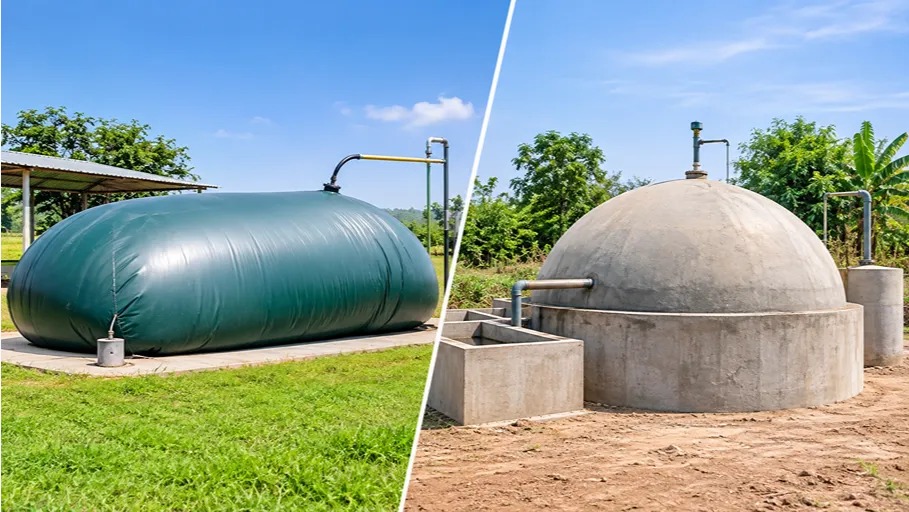
If you are planning a biogas project, one of the first questions is simple: should you go with a balloon type biogas plant or a fixed dome biogas plant? Both have been used for years, and both can work well. The right choice depends on your site, your budget, your gas needs and how you want to store the gas.
This guide explains the two options in plain words, so you can decide with confidence. We also look at why the fabric used in a Biogas Storage Balloon matters so much.
Understanding Biogas Plant Types
Biogas is made when organic waste such as cow dung, kitchen waste or farm residue breaks down without air inside a digester. The gas rises, and it needs a place to be collected and stored. The way a plant handles this storage is what separates one type from another.
Among the common biogas plant types, two come up most often: the fixed dome plant and the balloon digester.
What Is a Fixed Dome Biogas Plant?
A fixed dome biogas plant is a closed, rigid chamber, usually built from masonry or concrete, with a dome-shaped top. The digester sits mostly below ground. As gas is produced, it collects under the fixed dome and pushes slurry into a separate chamber.
Where it works well:
- Sites where underground construction is practical
- Projects that want a long-lasting, rigid body
- Places where the ground stays at a steady temperature
Things to keep in mind:
- Construction takes time and skilled labour on site
- Small cracks in the dome can lead to gas leaks, and they are not always easy to find
- Gas pressure changes as the slurry level moves, which can affect how steady the supply is
- Once built, it is hard to move or expand
What Is a Balloon Type Biogas Plant?
A balloon type biogas plant uses a flexible bag made from strong coated fabric. The bag holds the slurry and collects the gas, and it swells as gas builds up. Because the body is flexible, it can be shaped and placed in many different ways.
The same flexible idea also works for gas storage. In many projects, a digester makes the gas and a separate balloon holds it. This is where a Biogas Storage Balloon plays its part. It gives the gas a soft, low-pressure home until it is needed for cooking, heating or power.
Where it works well:
- Sites where digging deep is difficult
- Projects that need a lighter, flexible solution
- Setups where the gas storage must be added or changed later
- Places where quick planning matters
Things to keep in mind:
- The fabric has to be strong and well made, because the balloon is the gas holder itself
- The balloon needs to be protected from sharp objects and rough handling
- Good sunlight and weather resistance in the fabric make a big difference over time
Balloon vs Fixed Dome: A Simple Look
Here is how the two compare in everyday terms.
Construction. A fixed dome needs masonry or concrete work on site. A balloon is made from fabric, so the main body comes ready to use.
Flexibility. A fixed dome stays where it is built. A balloon system is easier to adjust when your needs change.
Gas storage. In a fixed dome, the stored gas sits at changing pressure as slurry moves. A storage balloon holds gas at low pressure and gives a more even, flexible store.
Site conditions. Fixed domes like soil that is easy to dig. Balloon systems suit places where deep digging is hard.
Maintenance. A fixed dome needs crack checks over time. A balloon needs regular checks of its fabric and fittings, which are simple to carry out.
Neither option is right for every project. The point is to match the plant type to your site and your gas use.
Why the Fabric Matters in a Balloon System
In a balloon system, the fabric does the hard work. It holds the gas, takes the stretch as the balloon fills and faces the weather every day. If the fabric is weak, the whole system suffers.
PVC coated fabric suits this job well. It is made from a strong woven textile base with a PVC coating on both sides. The base gives strength, and the coating helps keep gas in and water out. The fabric is also flexible, so it handles the filling and emptying of the balloon smoothly.
PVDF coated fabric is another strong option. Its surface is made to stand up well to sunlight and outdoor conditions, which helps in biogas sites where the balloon sits in the open.
What to look for in a good balloon fabric:
- Even coating on both sides with no thin patches
- Strong bond between coating and textile base
- Clean, strong seams that hold the shape under gas pressure
- Weather resistance for sun, rain and dust
- Consistent quality from one batch to the next
Using a Regular Storage Balloon in Your Plant
A Regular Storage Balloon is a simple, low-pressure gas holder. It works alongside a digester and keeps the gas ready for use. For farms, dairies, small plants and many other biogas projects, this kind of balloon is a practical, easy-to-understand choice.
It fits well when:
- You want a flexible gas store next to your digester
- You want to add storage to an existing setup
- Your gas use is steady and does not need high pressure
- You want a neat, simple solution that is easy to inspect
If you are searching for a Regular Storage Balloon India buyers can rely on, always ask about the fabric first. The fabric is the part that decides how well the balloon will hold up.
How to Choose Between the Two
Ask yourself a few simple questions before you decide:
- What does my site look like? Easy digging may suit a fixed dome. Hard ground may point to a balloon system.
- Do I want flexibility? If your needs may change, a balloon system is easier to adjust.
- How will I use the gas? Steady, low-pressure use often fits a storage balloon well.
- How much time do I have? Fabric-based systems can be planned faster than masonry builds.
- Who can supply good fabric? A trusted supplier makes a real difference in the final result.
Talking to a supplier early helps you see which direction is best for your project.
Why Choose Biodomes Membranes India
Biodomes Membranes India focuses on PVC and PVDF coated fabric for biogas membranes, including the Biogas Storage Balloon and the Regular Storage Balloon. The base coated textile is engineered by SIOEN Industries of Belgium, a respected name in technical textiles. It is then designed, cut and welded in-house to match each customer’s requirements, so the finished balloon is made around your project.
This in-house approach brings real benefits. Cutting and welding handled under one roof helps keep panels accurate and seams neat. The team uses advanced cutting and high-frequency welding machines, and trained professionals handle the work. For buyers who want a fabric-focused partner for gas membranes, Biodomes Membranes India offers a clear and dependable starting point.
If you are comparing a balloon with a fixed dome and want to learn more about the fabric side, you can reach out to the team and talk through your needs.