
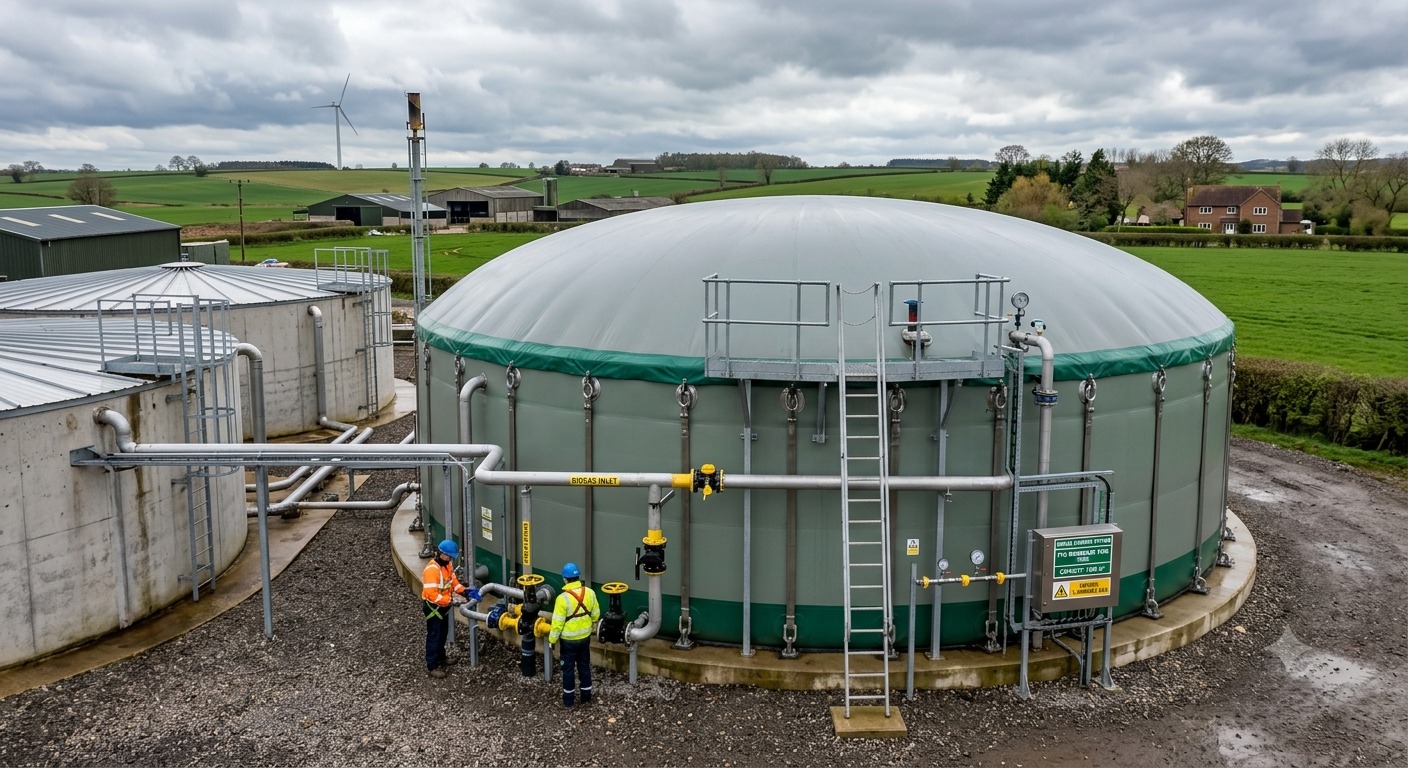
What Is a Biogas Storage PVC Tank? A Beginner's Guide
A biogas storage PVC tank is a flexible, gas-tight storage unit made from coated PVC fabric that holds the biogas produced by a digester until it's ready for use. Instead of a rigid metal or concrete structure, it uses a durable fabric membrane that expands and contracts as gas is added or drawn off often called a biogas dome or biogas balloon because of its rounded shape when full.
If you're researching biogas systems for the first time, this is usually one of the first terms you'll come across. Here's a clear breakdown of what it actually is, how it works, and where it's commonly used.
How Does a Biogas Storage PVC Tank Work?
A biodigester breaks down organic waste such as cattle dung, food waste, or agricultural residue through natural bacterial activity, producing biogas as a byproduct. That gas needs somewhere to go before it's used for cooking, heating, or power generation, and that's exactly where the storage tank comes in.
As gas flows in from the digester, the flexible PVC membrane expands to hold it. As gas is drawn out for use, the tank contracts. This flexible design keeps gas pressure relatively steady throughout the day and removes the need for bulky rigid tanks or complex pressure-regulating valves. The coated fabric itself is engineered to stay gas-tight, UV-resistant, and weatherproof, allowing it to sit outdoors for years without leaking or breaking down.
Why Choose a Flexible PVC Tank Over a Rigid One?
Flexible biogas storage offers several practical advantages compared to traditional rigid tanks:
- Lower installation cost, since there's no need for heavy civil construction or concrete work.
- Faster setup, with installation times that are typically much quicker than building a fixed structure.
- Flexible capacity, since the tank naturally adjusts in size as gas volume changes throughout the day.
- Strong weather resistance, thanks to UV-stable, waterproof coated fabric built for constant outdoor exposure.
- Simple maintenance, with far fewer mechanical parts compared to rigid pressurized systems.
For many biogas projects — especially small and mid-sized ones — this combination of lower cost and easier setup makes flexible PVC tanks the more practical option.
Where Are Biogas Storage PVC Tanks Used?
Biogas storage PVC tanks are used across a wide range of settings, including:
- Dairy and cattle farms, where cattle dung provides a steady, reliable feedstock for biodigesters.
- Agricultural and food processing units, using crop residue or food waste for biogas generation.
- Municipal and community biogas projects, supporting local cooking gas or small-scale power needs.
- Industrial waste-to-energy setups, converting organic waste streams into usable fuel.
- Household and small-farm biogas systems, particularly in rural areas looking for a low-cost, low-maintenance gas storage solution.
Because these tanks scale well and don't require major civil work, they suit projects ranging from a single household digester all the way up to larger community or industrial-scale systems.
What Makes a Good Biogas Storage PVC Tank?
Not every coated fabric performs the same way under constant gas storage conditions, so a few factors matter more than tank size or shape:
- Gas-tightness, to prevent leakage and pressure loss over time.
- UV and weather resistance, for long-term outdoor durability.
- Reliable seam strength, since welded joints are typically the first stress point in daily use.
- Flexibility that holds up, allowing the fabric to expand and contract repeatedly without weakening.
Getting these details right upfront makes a real difference in how long a tank performs reliably in the field.
Where This Fits Into a Larger Biogas System
A biogas storage PVC tank is just one part of a complete biogas setup — it works alongside the digester, inlet and outlet piping, and any gas-use equipment like burners or generators. Understanding this piece clearly makes it much easier to explore related decisions later, like choosing the right tank size, comparing manufacturers, or planning a full biodigester installation.
Why Choose Biodomes
Biodomes Membranes India manufactures biogas storage PVC tanks built specifically for this kind of long-term, real-world use, with coated fabric designed to handle daily expansion, outdoor exposure, and constant gas storage demands. For anyone researching a Biogas Storage PVC Tank India project, understanding how the tank itself works is a solid first step before comparing sizes, capacities, or suppliers — and Biodomes is a good place to continue that research.
FAQs
What is a biogas storage PVC tank made of?
It's made from coated PVC fabric engineered to be gas-tight, UV-resistant, and durable enough for years of outdoor use.
How long do biogas storage PVC tanks last?
With good-quality coated fabric and proper installation, these tanks can perform reliably for many years of continuous use.
Is a PVC biogas tank better than a rigid tank?
For many projects, yes — flexible PVC tanks cost less to install, set up faster, and require simpler maintenance than rigid pressurized systems.
Can biogas storage PVC tanks be used for small household systems?
Yes. They're commonly used for small-farm and household biodigesters, as well as larger agricultural, municipal, and industrial systems.