
A dairy farm produces dung every single day. With a cow dung biogas plant, that waste turns into gas that can be used for cooking, heating, or power. But the gas is made all day and night, while the farm does not use it at the same steady pace. That gap is why gas storage matters.
This guide explains how gas storage works on a dairy farm and what to look for in the membrane fabric that holds the gas.
How a Cow Dung Biogas Plant Works
In a cow dung biogas plant, dung is mixed with water and fed into a digester. Inside the digester, tiny microbes break the waste down without air. As they work, they release biogas, which is mostly methane.
Many people in India know this setup as a gobar gas plant. The idea is the same on a small family farm or a large dairy. Waste goes in, gas comes out, and what is left can often be used as a farm fertiliser.
Why Dairy Farms Need Gas Storage
The digester keeps making gas around the clock. The farm may need more gas in the morning and evening and less during the day. Without a place to hold the extra gas, it has nowhere to go.
A gas storage membrane solves this. It collects the gas as it is made and holds it at low pressure until you need it. This gives you a steady supply and helps you make full use of the dairy waste biogas your farm produces.
Biogas from Cow Dung Storage: The Options
Farms usually store biogas in one of a few ways. Some use a fixed dome built into the digester. Others use a membrane gas holder made from coated fabric.
Membrane storage is popular because the fabric is flexible. It rises as gas fills it and settles as gas is used. It is also lighter than a built structure, and it can be made to match the size of your plant. For farm biogas storage, this flexibility is a big help.
Where the Ground Mounted Dome Fits
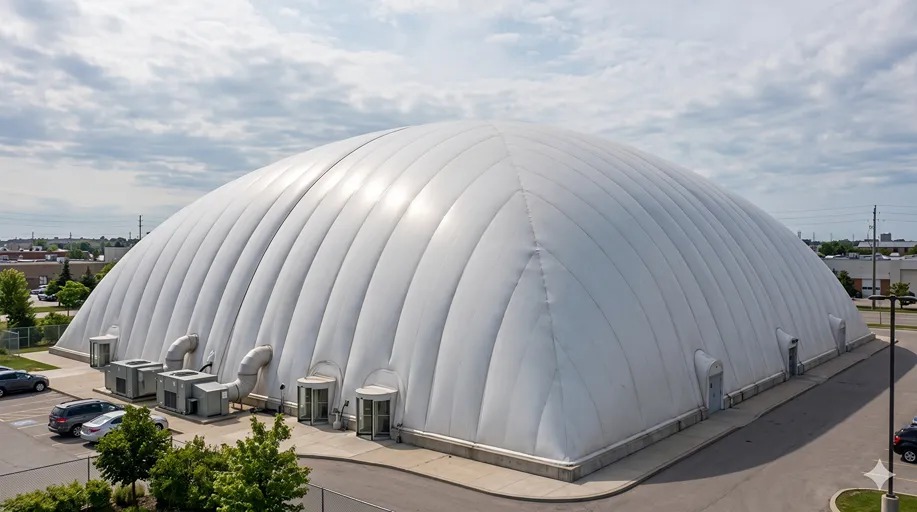
A ground mounted dome sits on the ground next to the digester instead of on top of it. It is a good fit for dairy farms that have open space and want to keep gas storage separate from the digester.
This setup gives you more freedom in how you plan your plant. The digester and the storage can each be planned on their own. It also makes it easy to look at the storage membrane when needed.
If you are searching for a ground mounted dome in India, think about the space you have, how much gas your plant makes, and how you plan to use the gas. These points will guide the size and design you need.
Why the Fabric Matters So Much
The membrane is the heart of any gas storage dome. It must hold gas without leaking, and it must handle sun, rain, and wind year after year. On a dairy farm the dome sits outdoors, so the fabric takes the full weather.
Good biogas membrane fabric is a strong woven base with a coating on both sides. The base gives strength. The coating keeps the gas in and protects the base from the weather.
PVC coated fabric is flexible and forms a solid barrier, which suits gas storage membranes well. PVDF coated fabric has a protective top finish that helps the surface handle long outdoor exposure. Both are used for biogas domes, and the right choice depends on your site and needs.
What to Look for in a Biogas Storage Membrane
When you review fabric for farm biogas storage, check the basics first.
- A smooth, even coating across the whole sheet
- Strong, well-finished seams that are sealed with care
- Fabric made for long outdoor use
- A size and shape that match your plant
Seams deserve special attention. A membrane is made from several fabric panels joined together. Strong, sealed joints help the dome keep its gas and keep its shape.
Plan Your Storage Size Early
The size of your storage depends on how much gas your plant makes and how you use it. A farm that uses gas mostly in the evening needs enough storage to hold the gas made during the day.
It helps to think about this before you build. Share your herd size, your digester size, and your gas use with your fabric partner. A clear picture helps them suggest a dome that fits your farm instead of one that is too small or too large.
Keep the Membrane in Good Shape
A little care goes a long way. Look over the membrane from time to time. Check the surface for dirt, wear, or damage, and check the seams and edges. Keep the area around the dome clear of sharp objects and heavy loads.
Dairy farms are busy places, so a short, regular check is easier than fixing a big problem later. A well-made membrane that is looked after can serve your farm for a long time.
Why Choose Biodomes
Biodomes Membranes India works with PVC and PVDF membrane fabric for biogas gas storage, including the ground mounted dome. The team makes membranes to suit your plant, so the dome fits your farm’s size and need instead of being a standard piece. The focus is on the fabric itself, since that is the part that holds your gas and faces the weather every day. If you are planning gas storage for a dairy farm, Biodomes Membranes India can help you choose the fabric and dome that suit your plant.