
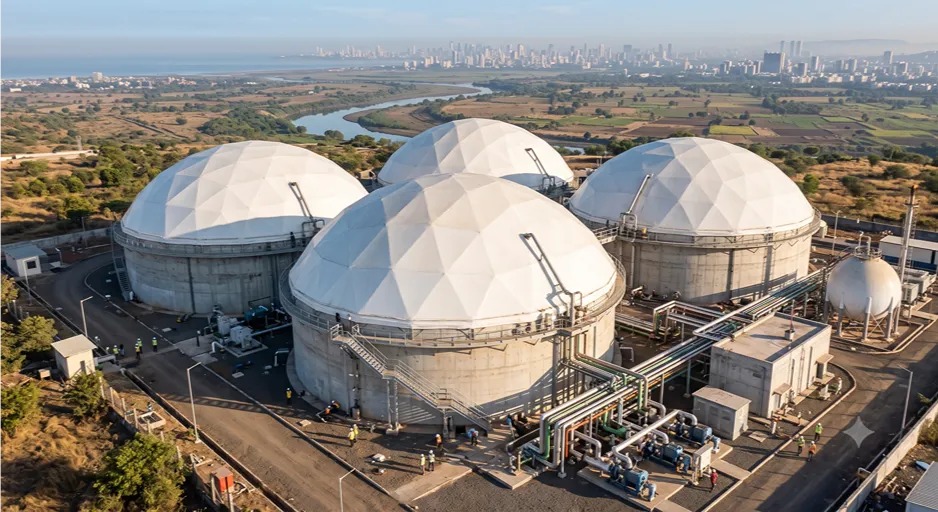
A biogas plant depends on one quiet hero: the dome cover on top of the digester. It holds the gas, keeps out the rain, and stands in the sun day after day. But what is this cover made of? And how is that fabric made?
This blog explains the fabric behind a Digester Mounted Dome, in simple words. If you are planning a biogas project, it will help you know what to look for.
What Is a Digester Mounted Dome?
A digester is the tank where waste breaks down and makes biogas. A Digester Mounted Dome sits right on top of this tank. It is a flexible dome made of strong coated fabric.
As gas builds up inside, the dome rises and swells. As gas is used, it settles down again. The dome acts like a soft storage balloon, sitting directly on the digester. This is why the fabric must be strong, flexible, and gas-tight.
Why the Fabric Is So Important
The fabric is the dome. There is no hard roof behind it. If the fabric is weak, gas can leak and the plant loses output. If it cracks in the sun, the whole cover can fail.
A good digester dome fabric has to do many jobs at once:
- Hold biogas without letting it escape
- Stay flexible as the dome rises and falls
- Handle sun, rain, heat, and wind
- Resist the gases and moisture inside the digester
- Last for a long time with little care
That is a lot to ask from one material. This is why the way the fabric is made matters so much.
How Coated Fabric Is Made
Let us look at the steps behind good industrial textile manufacturing for digester covers.
Step 1: The Strong Base Cloth
Everything starts with a woven base. This is a tightly woven cloth made from strong polyester yarn. It gives the fabric its strength and its ability to resist tearing. Think of it as the backbone of the material.
Step 2: The Coating
The base cloth is then coated with a layer of PVC on both sides. The coating is applied in a controlled way, so it spreads evenly across the whole surface. Even coating means even protection.
This layer is what makes the fabric gas-tight and waterproof. It also protects the base cloth from sun and weather.
Step 3: Special Finishes
Digester covers need extra protection, so the fabric can be given added finishes. A top layer can help the fabric stay cleaner, resist UV rays from the sun, and hold its colour. PVDF top finishes are also used for fabrics that need extra protection outdoors. These finishes help the fabric stay fresh for longer.
Step 4: Quality Checks
Before the fabric is used, it is checked for strength, coating quality, and finish. This makes sure the material is ready for real work on a biogas plant.
From Fabric Roll to Dome Cover
A fabric roll is not yet a dome cover. The next step is shaping it to fit the digester.
Every digester has its own size. So the fabric is designed, cut into panels, and joined together to form the dome shape. The panels are joined using high-frequency welding. This creates smooth, strong, gas-tight seams without needle holes. A good seam is just as important as good fabric, because it is where leaks usually start.
The finished dome is made to the exact size of your digester, so it fits neatly and works well.
What to Look for in PVC Coated Fabric for Digesters
If you are choosing a supplier, keep these points in mind.
Gas tightness. The fabric should hold biogas well. Ask how it is tested.
Strength. A strong base cloth helps the dome handle the pull of gas pressure and wind.
Weather protection. Look for UV resistance and good protection from rain and heat.
Flexibility. The dome moves up and down many times. The fabric must bend easily without cracking.
Seam quality. Check that seams are welded neatly and evenly.
Custom sizing. Every digester is different. The cover should be made to your size.
Why Choose a Trusted Coated Fabric Supplier in India?
Biogas plants run for a long time. So the fabric you choose is a long-term choice. A trusted coated fabric supplier India can guide you on the right fabric for your digester size, your climate, and your plant type.
Good suppliers also help with the details: fabric type, thickness, colour, and how the panels are joined. This support saves you time and helps you avoid mistakes later.
Fabric You Can Rely On from Biodomes Membranes India
At Biodomes Membranes India, we supply PVC and PVDF coated fabric for biogas domes and digester covers. The base coated textile is engineered by SIOEN Industries of Belgium, a well-known name in technical textiles. We then design, cut, and weld it in-house to match your digester.
Our focus is simple. We want to give you fabric that holds gas well, stands up to the weather, and works reliably for your plant. If you are looking for a digester cover fabric supplier who understands biogas needs, Biodomes Membranes India is here to help.
Whether it is a small farm plant or a large project, you can count on us for fabric made with care. You can learn more about our full range at Biodomes Membranes India.
Quick Checklist Before You Order
- What is the size of your digester?
- Which fabric suits your plant and climate?
- How will the panels be joined?
- Do you need a special top finish for sun protection?
- Does your supplier make the dome to your exact size?
With these answers ready, choosing the right fabric is much easier.
Frequently Asked Questions
1. What fabric is used for a Digester Mounted Dome?
PVC coated polyester fabric is widely used. It is gas-tight, flexible, and weather resistant.
2. Why is coated fabric used for digester covers?
The coating makes the fabric waterproof and gas-tight, while the woven base gives strength.
3. How are dome panels joined together?
They are joined by high-frequency welding. This gives strong, smooth, gas-tight seams.
4. Can the dome cover be made to my digester size?
Yes. The fabric is cut and welded to fit your digester exactly.
5. Does the fabric handle sun and rain?
Yes. UV-resistant coating and waterproof layers protect the fabric outdoors.