
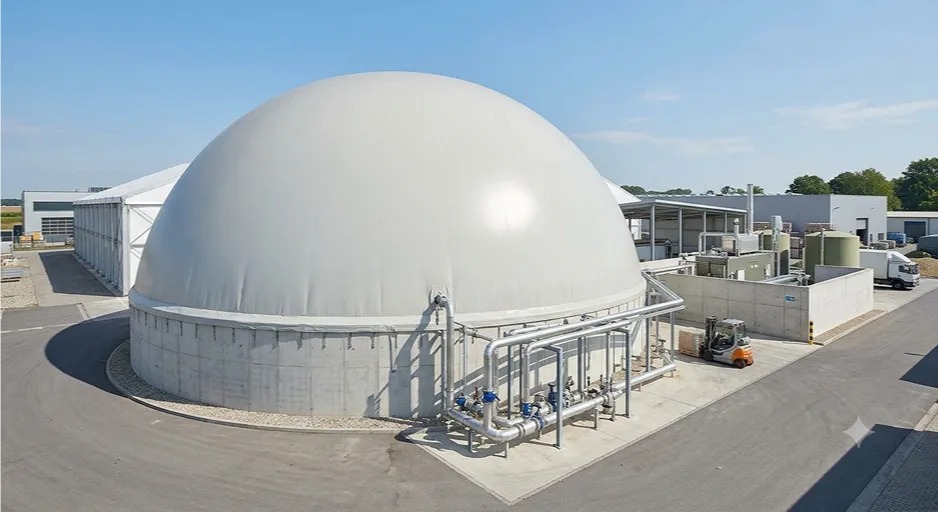
A biogas plant needs a safe way to hold its gas. The gas holder that sits on top of the digester does this job. It stores the biogas, keeps it sealed and protects it from the weather. This is the work of a digester mounted dome.
This guide explains what a digester mounted dome is, what to look at in its specifications, how to think about sizing and what to keep in mind during installation. It is written for plant owners, project teams and buyers who want clear answers in simple words.
What Is a Digester Mounted Dome?
A digester mounted dome is a gas holder made from coated fabric. It is fitted on top of the digester. As the digester produces biogas, the dome fills. As the gas is used, the dome settles back down.
The fabric is the most important part of the dome. It has to hold gas, stay sealed and handle sun, rain and wind every day. This is why the choice of fabric matters so much.
Digester Mounted Domes Specifications: What to Check
When you look at digester mounted domes specifications, start with the fabric, because the fabric is the dome. Here is what to check:
- Fabric type: The cloth should be a coated technical fabric made for gas holding and outdoor use. PVC and PVDF coated fabrics are widely used for this kind of work.
- Gas tightness: The fabric must keep biogas inside without leaking.
- Weather resistance: The dome faces sun, rain and wind, so the fabric needs to be made for outdoor use.
- Seam quality: Welded seams keep the dome sealed and strong where the fabric panels join.
- Fittings and openings: Gas outlets and other connections should be planned clearly and finished neatly.
Ask your supplier to explain each point in simple words. A good supplier will be happy to.
CBG Plant Components: Where the Dome Fits
CBG stands for compressed biogas. A CBG plant has several parts that work together. Biogas is produced in the digester, stored in a gas holder, then cleaned and upgraded before it is compressed.
The digester mounted dome is the gas holder in this chain. It holds the biogas that the digester produces, so the other parts of the plant can work with it. If the dome is weak or leaks, the whole plant feels it. This is why the dome deserves as much care as any other part of the plant.
Biogas Dome Sizing Guide: How to Think About Size
Sizing is one of the most common questions plant owners ask. The right size depends on your plant, so the best sizing always starts with a conversation with your supplier. Here is a simple biogas dome sizing guide to help you prepare for that talk:
- The digester: The dome must match the digester it sits on. Share exact digester details with your supplier.
- Gas production: A plant that produces more gas needs a holder that can store it comfortably.
- Storage needs: Think about how long you want to store gas before it is used.
- Site conditions: Wind, sun and rain at your location affect the choice of fabric and design.
- Future plans: If you plan to grow the plant, mention it early.
Do not guess the size. Give your supplier the plant details and let them work out a dome that fits.
Digester Mounted Domes Installation: What to Keep in Mind
Good installation protects good fabric. Even the best fabric can be damaged by rough handling or poor preparation. These are general points for project teams:
- Prepare the fixing area: The surface should be clean, even and ready before the dome arrives.
- Handle the fabric with care: Avoid dragging it on rough ground, and keep it away from sharp edges and tools.
- Follow the supplier's details: The dome is made to fit a particular digester, so follow the information provided.
- Check connections: Gas outlets and fixing points should be checked carefully.
- Test before use: Check the dome for leaks before it goes into regular use.
Work with an experienced team and keep your supplier's guidance close at hand.
What to Look For in a Biogas Dome Supplier
Choosing the right supplier is as important as choosing the right fabric. Before you decide, ask a few simple questions:
- Where does the coated fabric come from?
- Are the seams welded, and how is the fabric cut and shaped?
- Can the dome be made to match my digester?
- What does the supplier suggest for care after installation?
Clear, honest answers help you choose a supplier you can trust.
How to Look After a Digester Mounted Dome
A dome is built to last, but regular care keeps it in good shape.
- Check the fabric for marks, rubbing or loose areas.
- Look at seams, fittings and connections from time to time.
- Keep the surface clean and free from sharp objects.
- Report any change in how the dome holds or releases gas.
Small checks done on time can prevent bigger problems later.
Why Choose Biodomes Membranes India for Digester Mounted Domes
Biodomes Membranes India is built around fabric for biogas domes. Here is what you can expect:
- Trusted fabric source: The PVC and PVDF coated fabric is engineered by SIOEN Industries of Belgium.
- Made to your plant: The fabric is cut and welded in-house to your needs and details.
- Fabric-first focus: Our work is built around PVC and PVDF coated fabric, so you can talk to us about the cloth, the coating and the finish.
- Support for plant teams: Share your digester and plant details with us, and we will help you choose a fabric and design that suits them.
Frequently Asked Questions
What is a digester mounted dome used for?
It stores biogas on top of the digester and keeps it sealed from the weather.
Which fabric is used for digester mounted domes?
PVC and PVDF coated fabrics are widely used because they are made for gas holding and outdoor use.
How do I decide the right dome size?
Share your digester and plant details with your supplier. The size should match your digester and gas storage needs.
Why do seams matter in a biogas dome?
Welded seams keep the dome sealed and strong at the joins, which helps prevent gas leaks.