
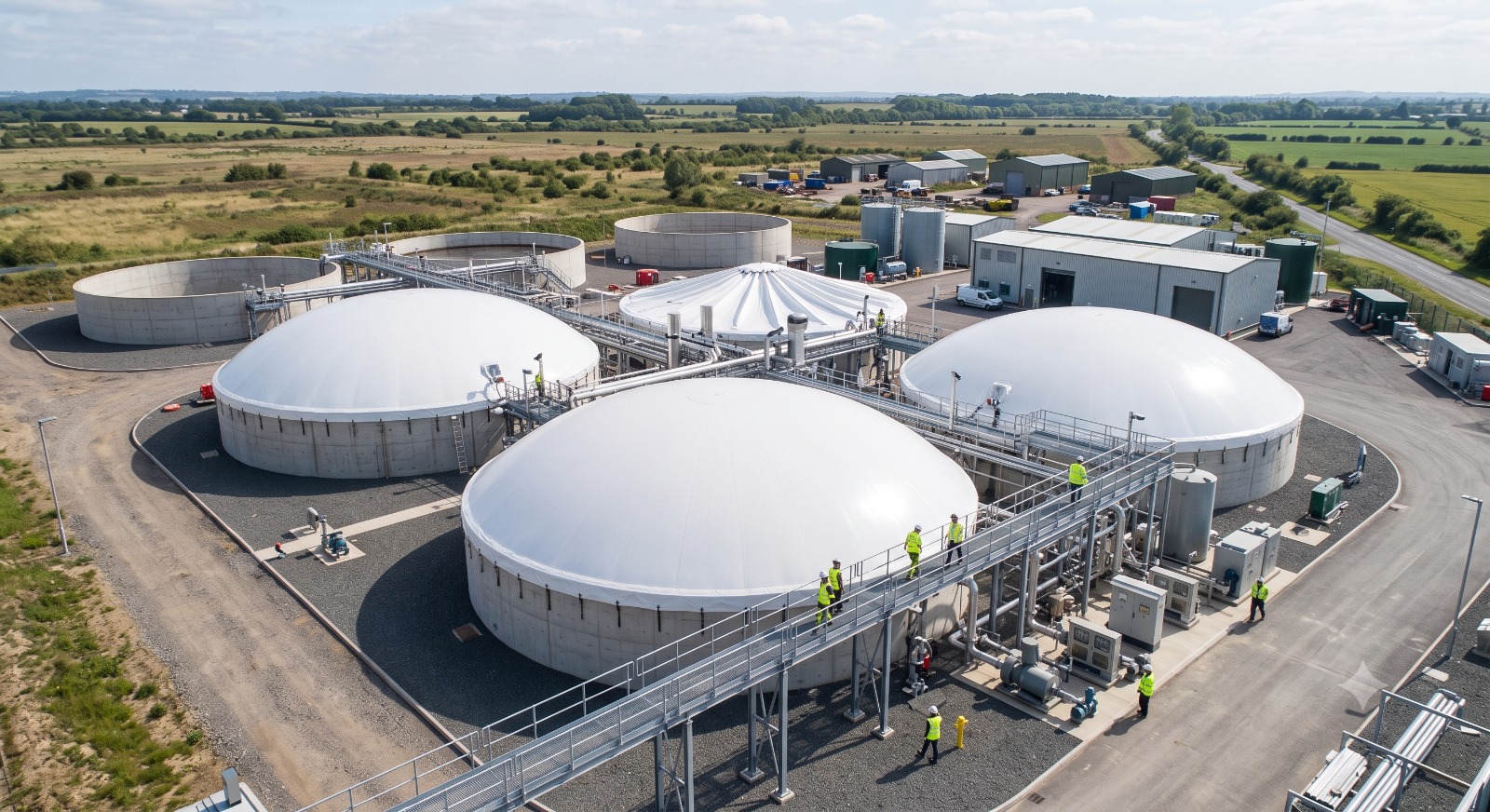
A biogas system is only as reliable as the cover sealing it. The dome gas membrane cover sits at the center of the whole setup — holding gas pressure, keeping the digester sealed, and standing up to weather day after day. When it's made from the right material, it quietly does its job for years. When it isn't, gas leaks, pressure loss, and premature wear become recurring problems. This post breaks down what a dome gas membrane cover actually is, how it works, and why fabric quality matters as much as design.
What Is a Dome Gas Membrane Cover?
A dome gas membrane cover is a flexible, gas-tight fabric structure installed over a biogas digester or gas holder to contain the gas produced during the digestion process. Instead of a rigid metal or concrete roof, the cover uses coated fabric — typically PVC or PVDF coated textile — stretched and sealed into a dome shape that flexes with changing gas volume. As gas is produced and drawn off, the membrane rises and falls with pressure, acting as both a seal and a flexible storage reservoir.
This flexibility is part of what makes membrane covers practical for gas holder applications: the cover expands to accommodate stored gas and settles as gas is used, without the mechanical complexity of a moving rigid lid.
Why Fabric Choice Directly Affects Gas Quality and Safety
The cover fabric isn't just a physical barrier — it directly protects the integrity of the gas being stored. A digester cover fabric needs to hold an airtight seal under constant pressure cycling, resist degradation from biogas components like moisture and trace hydrogen sulfide, and stay flexible through repeated expansion and contraction without cracking or weakening at seams.
If the biogas roof membrane starts to degrade — through UV exposure, poor coating quality, or weak seam welding — the result isn't just a maintenance issue. It's gas loss, pressure inconsistency, and in some cases, safety risk. This is why the coating and weld quality of a gas holder membrane cover matter just as much as the base fabric strength.
Key Traits of a Reliable Dome Cover Membrane
- Airtight sealing — the coating and weld quality need to hold pressure consistently over the digester's full expansion and contraction cycle, without micro-leaks developing at seams.
- UV and weather resistance — outdoor installations face constant sun exposure, and a cover that degrades under UV will lose flexibility and strength well before its expected service life.
- Chemical resistance — biogas contains moisture and trace gases that can degrade unsuitable materials over time; the coating needs to hold up to this environment specifically, not just general outdoor exposure.
- Flexibility under pressure cycling — the membrane expands and contracts daily as gas is produced and drawn off, so it needs to flex repeatedly without stress cracking.
Sourcing the Right Membrane Cover
Because the cover directly affects both gas containment and system safety, sourcing fabric from a manufacturer that understands biogas-specific demands makes a real difference. Biodomes supplies PVC and PVDF coated fabric engineered for dome gas membrane covers, built to hold pressure, resist biogas exposure, and perform reliably across long outdoor installations. For biogas system builders and dealers, working with Biodomes means sourcing cover fabric that's been built specifically for this application, rather than adapted from general-purpose coated textile.
Frequently Asked Questions
What's the difference between a dome gas membrane cover and a rigid gas holder lid?
A membrane cover uses flexible coated fabric that expands and contracts with gas volume, while a rigid lid relies on mechanical movement — membrane covers are generally simpler to install and maintain.
How long does a biogas roof membrane typically last?
With good coating quality and proper installation, membrane covers are built for long-term outdoor service, though actual lifespan depends on UV exposure, gas composition, and maintenance.
Can a digester cover fabric handle pressure fluctuations from daily gas production?
Yes — a properly engineered membrane is designed to flex with regular pressure cycling without weakening at seams or losing its seal.
Is the cover fabric resistant to the gases produced during digestion?
Coated fabric built for biogas applications is engineered to resist moisture and trace gas exposure from the digestion process, unlike general-purpose coated textiles.