
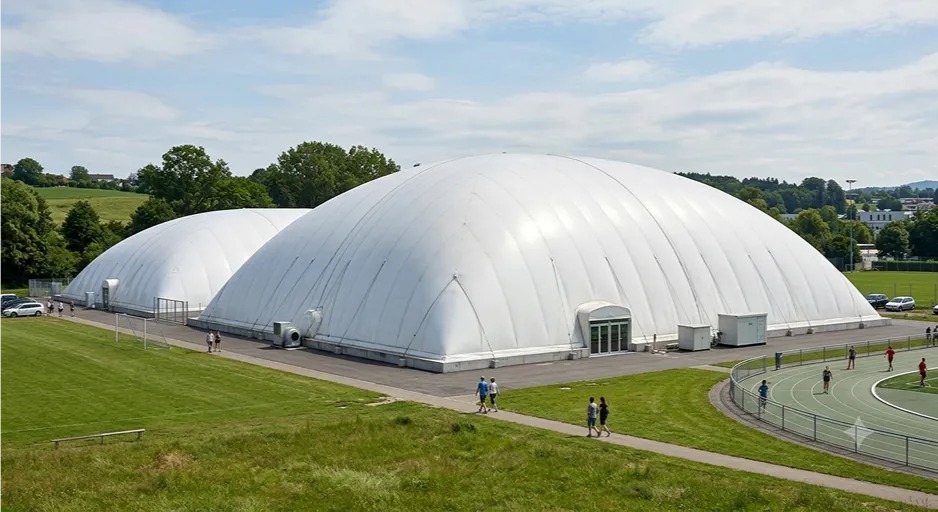
Compressed biogas (CBG) plants need a safe and reliable way to store gas. A Double Membrane Air Dome is one of the most common answers. It sits on top of a digester or a storage tank, holds the biogas, and protects it from the weather.
The fabric is the most important part of this dome. In this guide, we explain how a double membrane dome works, what its specifications mean, which parts are linked to it in a CBG plant, and how installation usually goes.
What Is a Double Membrane Air Dome?
A double membrane air dome has two layers of coated fabric:
- Outer membrane: It faces the sun, wind and rain. It gives the dome its shape and protects the gas layer inside.
- Inner membrane: It holds the biogas. As gas is produced, this membrane rises. As gas is used, it comes down.
The space between the two layers is filled with air from a small blower. This air keeps the outer membrane firm and round, so the dome holds its shape in all conditions.
Both layers are made from coated fabric. PVC and PVDF coated fabrics are widely used here, because they are strong, flexible and made for outdoor use.
Where Double Membrane Air Domes Are Used
- CBG plants
- Biogas plants of different types
- Digester roofs
- Gas holder and gas storage tanks
- Wastewater and organic waste treatment plants
Double Membrane Air Dome Specifications
When you ask for a quote, you will see a list of specifications. Here is what each one means in simple words.
1. Fabric Type
Coated PVC or PVDF fabric on a strong polyester base. The coating on both sides makes the fabric waterproof and gas-tight, and gives protection from sun and weather.
2. Gas Tightness
The inner membrane must hold biogas without leaking. The fabric coating and the quality of the welded seams together decide this.
3. UV and Weather Resistance
The outer membrane works in open sun and rain. A good coating protects the base cloth, so the dome keeps its strength and look.
4. Seam Strength
Panels are cut to pattern and welded together. Strong, even welds are key for both gas tightness and long life.
5. Size and Shape
The dome is made to match the digester or tank it will cover. The size depends on the plant design, so it is shared by the plant designer or the client.
6. Colour and Finish
Colour options are chosen to suit the site. A top-coat finish helps the surface stay clean.
7. Fittings and Connections
A dome works with an air inlet for the blower, a gas outlet and safety parts. These are decided by the plant design.
To keep your order smooth, share your drawings and plant details with your supplier at the start. This helps them prepare fabric panels that fit your plan.
Main Components in a CBG Plant
A double membrane dome is one part of a larger system. Here are the CBG plant components it works alongside:
- Feedstock handling area: where organic waste or crop residue is received and prepared
- Digester: where the material breaks down and produces biogas
- Double membrane gas holder: the dome, which stores the gas
- Gas cleaning and purification units: which clean the gas for use as CBG
- Compression and filling units: which prepare the gas for dispatch
- Digestate handling: which manages the material left after digestion
The dome connects the digester to the cleaning stage. It acts as a buffer, so gas flow stays steady even when production changes.
Double Membrane Air Dome Installation: General Flow
Installation is planned by the plant designer and follows the project drawings. Here is a simple overview of how it usually goes.
- Check the base. The digester or tank top must be ready as per the drawings, with the fixing ring or anchor points in place.
- Check the fabric on arrival. Open the panels, check sizes, seams and fittings against the order.
- Lay out the membranes. The inner and outer membranes are spread carefully, keeping them clean and free from sharp objects.
- Fix the edges. Membranes are fixed to the ring or anchor points with the clamping system shown in the drawings.
- Connect the air supply. The blower is connected to the space between the two membranes.
- Inflate and shape. The blower is started and the outer membrane takes its round shape.
- Inspect seams and edges. Walk through a visual check for any gaps, folds or loose points.
- Leak test. The system is tested before gas is introduced.
- Commissioning. After the checks are complete, the plant moves to regular operation.
Always follow the plant designer's drawings and the safety rules of your site for each step.
Care Tips for Long Dome Life
- Keep the outer surface clean with simple washing
- Check seams, edges and fittings on a regular schedule
- Keep sharp objects and loose material away from the dome
- Make sure the blower runs properly, as it keeps the outer shape firm
Your Fabric Partner: Biodomes Membranes India
The fabric is what makes a dome safe and dependable. Biodomes Membranes India supplies PVC and PVDF coated fabric for biogas and CBG plants, with a focus on strong, gas-tight, weather-ready material.
The coated textiles are engineered by SIOEN Industries of Belgium, a well-known name in technical fabrics. Biodomes Membranes India cuts and welds this fabric to your drawings, so you get clean panels and strong seams that match your plan.
When you work with the team, you get:
- Coated PVC and PVDF fabric made for biogas use
- Precision cutting and strong welding of every panel
- Fabric made to your specifications
- Help in selecting the right fabric grade and finish for your plant
If you need a Double Membrane Air Dome for a CBG or biogas project, Biodomes Membranes India is ready to discuss your needs.
FAQs
1. What is a double membrane air dome?
It is a gas storage cover with two fabric layers. The inner layer holds the biogas, and the outer layer protects it and keeps its shape with air from a blower.
2. Why is a double membrane dome used in CBG plants?
It stores biogas safely and keeps gas flow steady between the digester and the cleaning units.
3. Which fabric is used for double membrane air domes?
PVC and PVDF coated fabrics on a polyester base are widely used because they are strong, flexible and weather-resistant.