
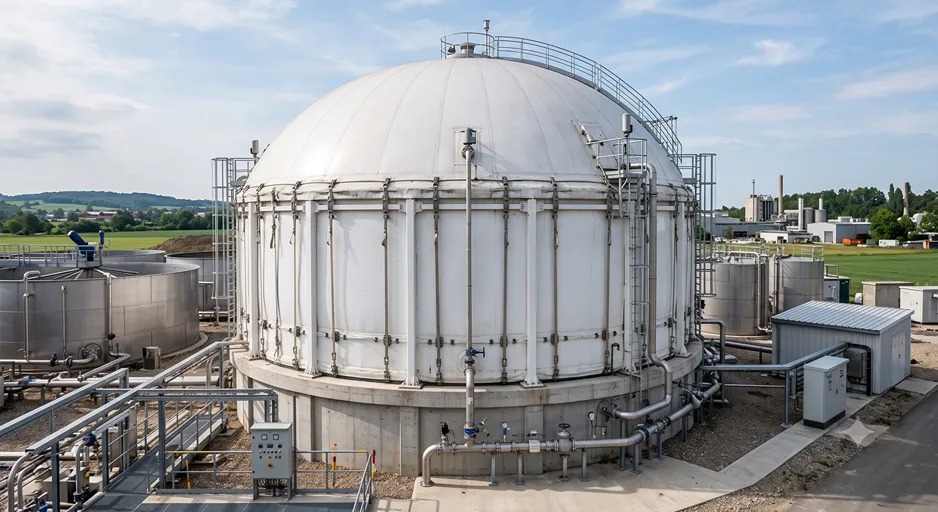
What Is a Double Membrane Gas Holder? How It Works and Why It's Widely Used
If you are setting up or upgrading a biogas plant, you have likely come across the term "double membrane gas holder." It is one of the most widely used designs for storing biogas safely, and for good reason. In this guide, we will break down how a double membrane gas holder works, what each membrane does, and why this design has become a standard choice for biogas storage.
What is a Double Membrane Gas Holder?
A Double Membrane Gas Holder is a gas storage system built using two separate fabric layers, an inner membrane and an outer membrane, working together over a biogas digester. Instead of a single fixed cover, this two-layer design gives the system flexibility to store changing volumes of gas while staying protected from outside weather conditions.
This design is widely used across household, farm, and industrial biogas plants because it balances safety, flexibility, and weather protection in one system.
How Does a Double Membrane Gas Holder Work?
The system is made up of two connected parts, each with its own job:
1. Inner Membrane
The inner membrane sits directly above the digester and holds the biogas produced during the digestion process. As gas is produced, the inner membrane expands upward. As gas is drawn out for use, it contracts back down. This constant movement means the inner membrane needs to stay flexible and fully gas-tight at all times.
2. Outer Membrane
The outer membrane forms a protective dome around the inner membrane. A small blower keeps air flowing between the two layers, which maintains steady pressure and keeps the outer membrane in a rounded, stable shape. This outer layer is what protects the inner gas-holding membrane from sun, rain, wind, and general outdoor wear.
Together, these two layers create a system where the inner membrane focuses purely on holding gas, while the outer membrane takes on the job of weather protection.
Why Double Membrane Biogas Domes Are Widely Used
A double membrane biogas dome offers a few clear advantages over simpler single-layer covers:
- Flexible gas storage – The inner membrane expands and contracts smoothly as gas volume changes through the day
- Better weather protection – The outer membrane shields the whole system from direct sun and rain
- Stable shape – Constant air pressure between the layers keeps the dome looking rounded and steady, rather than sagging
- Longer working life – Since the inner membrane is shielded by the outer layer, it faces less direct weather exposure
This combination makes the double membrane design a practical choice for plants that need reliable, long-term gas storage.
Key Points in Biogas Dome Design
When planning a gas holder system, a few design factors matter for how well it performs:
- Membrane fabric quality – Both layers need to be flexible, gas-tight, and weather resistant
- Blower system – A steady, reliable air supply between the layers keeps the outer membrane properly inflated
- Sizing – The gas holder needs to be sized to match how much gas the plant produces and stores day to day
- Connections and fittings – Gas inlet, outlet, and pressure release points need to be sealed and positioned correctly
Getting these details right at the design stage helps the system run smoothly with fewer issues later on.
The Fabric Behind a Reliable Gas Holder
The performance of a double membrane gas holder depends heavily on the fabric used for both layers. Biodomes Membranes India supplies PVC and PVDF coated fabric designed for double membrane biogas dome applications, built to handle the constant flexing of the inner membrane along with the outdoor exposure faced by the outer layer.
If you are planning a biogas plant and comparing gas holder options, choosing fabric suited specifically to double membrane systems makes a real difference to how the system performs over time. Biodomes Membranes India works with plant owners, fabricators, and dealers to supply coated fabric for gas holder projects of different sizes.
Frequently Asked Questions
What is the difference between the inner and outer membrane?
The inner membrane holds the biogas directly and expands or contracts with gas volume. The outer membrane protects the inner layer from weather and helps keep the dome's shape stable.
Why is a blower needed in a double membrane system?
A blower keeps constant air pressure between the two membranes, which keeps the outer dome inflated and holds its rounded shape.
Is a double membrane gas holder better than a single membrane cover?
A double membrane system generally offers better weather protection and a more stable shape, since the outer layer shields the inner gas-holding membrane from direct sun and rain.
Can double membrane gas holders be used for large biogas plants?
Yes, double membrane gas holders can be designed and sized for household plants as well as larger farm and industrial biogas systems.