
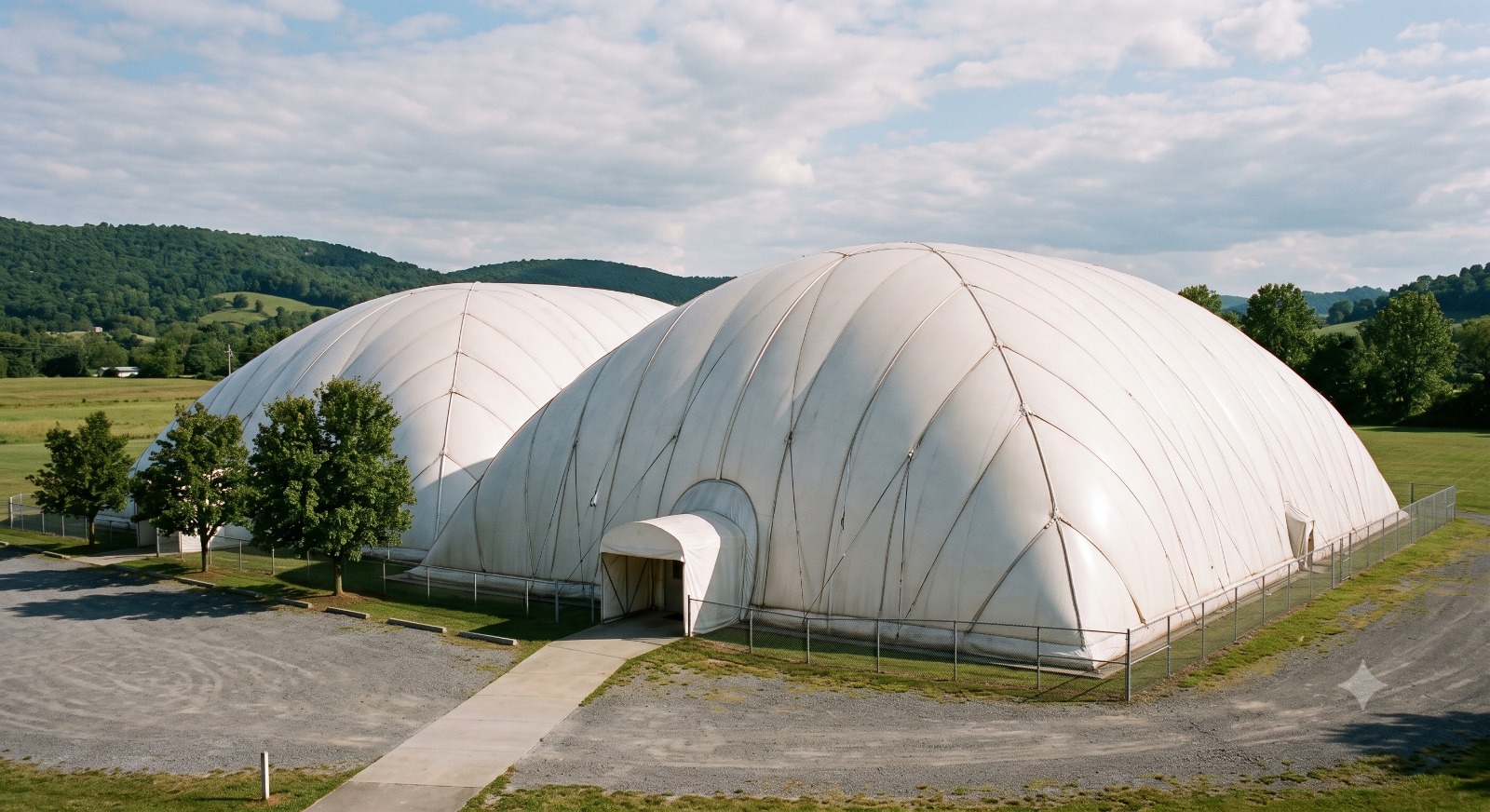
Most people looking into air domes start by comparing sizes, shapes, and price quotes. Fair enough those are the numbers that show up first. But if you spend any real time talking to people who've owned one for a few years, the conversation almost always circles back to one thing: the fabric.
The steel anchoring and blower system get a dome up and inflated. The fabric is what determines whether it's still standing strong five winters later, or sagging and patched with tape.
Why Double Membrane Construction Exists in the First Place
A double membrane air dome uses two layers of coated fabric with a controlled air gap between them, rather than a single skin. That gap isn't just for show it acts as an insulating buffer, cutting down heat loss in cold weather and reducing heat gain in hot climates. It also gives the structure a second line of defence; if the outer layer takes minor abrasion or wear, the inner membrane is still doing its job.
This is one of the reasons double membrane structures have become the preferred choice for sports facilities, warehouses, and industrial covers that need to stay usable across every season, not just fair-weather months.
What the Fabric Actually Has to Handle
An air dome membrane lives under constant physical stress that most outdoor fabric never sees. Between the internal air pressure keeping the structure inflated, wind loading pushing against the surface, and UV exposure baking it day after day, the material has very little margin for weak spots.
A properly engineered air dome membrane fabric needs to manage a fairly demanding list at once:
- Hold consistent tensile strength under constant internal air pressure without stretching out of shape
- Resist UV degradation so the coating doesn't chalk, fade, or become brittle over years of sun exposure
- Stay fully airtight at the base fabric level, since even minor porosity affects blower efficiency and running cost
- Handle wide temperature swings without stiffening in cold weather or softening excessively in heat
- Weld cleanly at the seams, since a dome's seams are under continuous tension, not occasional strain like a tarp
Get any one of these wrong and it shows up fast either as a slow pressure leak, a sagging patch, or fabric that starts cracking at the fold lines within a couple of seasons.
Why PVC Coating Is the Standard Choice
Most quality air dome membranes are built on a woven polyester base with a PVC coating on both sides. This combination works well because the woven core carries the tensile load, while the coating handles waterproofing, UV resistance, and airtightness.
Sourcing this correctly matters more than people expect. Working with an established PVC fabric supplier rather than a generic tarpaulin reseller means the coating thickness, UV stabilizer content, and base fabric denier are all specified and consistent from roll to roll not something you're guessing at after the dome is already installed.
For higher-demand environments, some double membrane air domes use a PVDF top coating instead of standard PVC lacquer, which adds extra resistance to dirt pickup and UV breakdown over the fabric's lifespan, particularly useful in dusty industrial settings or areas with intense year-round sun.
What to Ask a Manufacturer Before Ordering
If you're comparing suppliers, the fabric conversation should go deeper than "is it durable." A few things worth actually asking:
- What's the coating weight (GSM), and is it consistent across the whole panel, not just the sample swatch?
- Are seams welded or stitched, and what's the tested seam strength?
- What UV warranty is offered, and is it tied to actual colour and strength retention?
- Is the fabric sourced from an air dome fabric manufacturer with dome-specific experience, or general tent and tarp production?
That last question matters more than it seems. Fabric built for static tents doesn't always perform the same way under the continuous internal pressure and cyclic stress an air dome puts it through.
Sourcing the Right Fabric
This is where working with a supplier who understands both the textile engineering and the structural application pays off. As one of the established names offering Biodomes Membranes India wide, we've seen firsthand how much long-term difference proper fabric specification makes not on day one when everything looks the same, but three or four years into a dome's working life. Whether you're comparing options for a sports facility, a warehouse cover, or an industrial application, sourcing genuine coated fabric for air domes from a proper technical textile manufacturer tends to be the difference between a structure that ages gracefully and one that needs premature replacement.
FAQs
Q1. What's the difference between single skin and double membrane air domes?
Double membrane domes use two fabric layers with an insulating air gap, offering better temperature control and an added layer of protection compared to single skin structures.
Q2. How long does a good quality air dome membrane last?
With proper UV-stabilized PVC coating and correct installation, air dome fabric can perform reliably for many years, depending on climate and usage intensity.
Q3. Is PVC or PVDF coating better for air domes?
Both perform well; PVDF offers added resistance to dirt pickup and UV breakdown, making it a common choice for harsher or dustier environments, while PVC remains a solid standard option.
Q4. Can a damaged air dome membrane be repaired?
Yes, minor damage can typically be patched or seam-repaired without replacing the entire membrane, provided it's addressed early.
Q5. Does air dome fabric affect energy costs?
Yes, fabric quality and insulation performance directly impact how hard the blower system has to work to maintain pressure and internal temperature.
It can often be used directly on fields, though some farms choose to dry or compost it further depending on their soil and crop needs.