
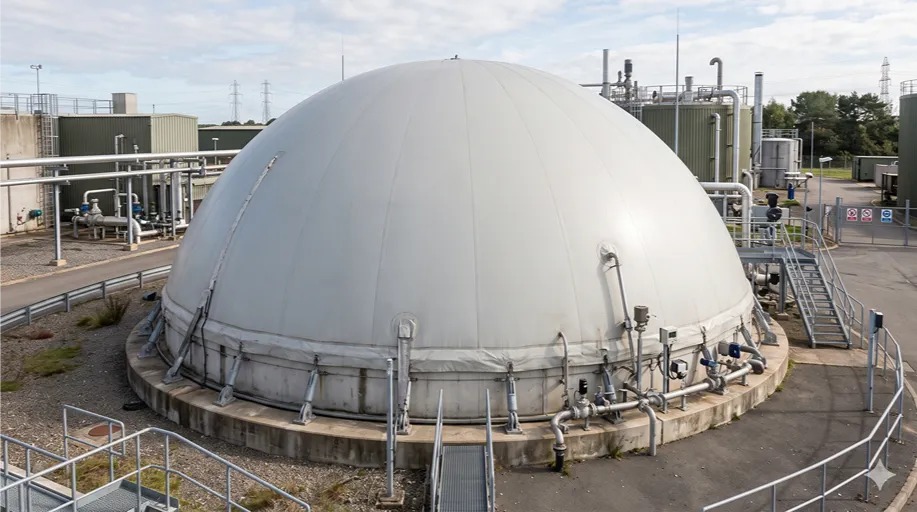
Every biogas plant needs a safe place to hold its gas. The gas must be stored, kept steady in pressure, and sent on to the engine, boiler or burner when it is needed. A ground mounted gas dome is one of the most practical ways to do this, especially when you have open land around your digester.
This blog explains what a ground mounted biogas dome is, how it works, which site conditions matter, and how to decide if it suits your plant. It is written for plant owners, project developers, engineers and EPC teams in India.
What Is a Ground Mounted Gas Dome?
A ground mounted gas dome is a gas storage unit that sits on the ground beside your digester. It is also called a free standing biogas dome or a biogas dome on ground. It does not sit on top of the digester tank. It stands on its own base and holds the gas that the digester produces.
The dome is made from strong, flexible coated fabric. The fabric forms a gas-tight membrane. As biogas flows in, the membrane rises and takes its dome shape. As gas is used, the membrane settles down. The dome therefore acts like a soft, breathing storage tank for your gas dome for biogas plant needs.
How a Ground Mounted Biogas Dome Works
The working idea is simple.
- Biogas leaves the digester through a pipe.
- The pipe carries the gas into the dome.
- The membrane fills and rises as gas collects.
- A blower or pipeline then draws the gas out for use.
Many ground mounted designs use a double membrane. The outer layer keeps its shape and protects the plant from wind and weather. The inner layer holds the gas and moves up and down as the volume changes. The space between the two layers is kept filled with air, which helps the dome stay firm and stable.
Why the Fabric Matters
The fabric is the heart of the dome. It is in constant contact with sun, rain, dust and the gas itself. Biogas contains moisture and small amounts of other gases, so the fabric must be built for this work.
PVC and PVDF coated fabrics are well known for this kind of use. They are strong, they resist weather, and they can be welded to form tight seams. PVDF coating adds extra protection on the surface, which helps the fabric stay clean and hold up under sun and weather. A well-made dome starts with a well-made fabric, so this is the first thing to look at when you compare options.
Benefits of a Free Standing Biogas Dome
Steady gas supply. The dome stores gas so your engine or burner gets a smooth, even flow, even when digester output rises and falls through the day.
Easy to reach. Because the dome sits at ground level, your team can see it and check it with ease during regular rounds.
Works with different digester types. Since the dome is separate, it can serve many plant layouts. It suits new plants and also plants that want to add more storage later.
Light and flexible material. A fabric dome is much lighter than a rigid steel or concrete gas holder, so it puts less load on the ground.
Quick to plan around. A membrane dome is made to a set size and shape, so you can plan your layout early and with clarity.
Site Fit for a Gas Dome: What to Check
Choosing the right site is the most important step. Here are the points to study before you decide on a ground mounted gas dome.
1. Open Land Near the Digester
A free standing dome needs its own space. Measure the area you can give it, and leave clear room around it for safe movement and for routine checks. Keep the dome close enough to the digester so the gas pipe stays short and simple.
2. Firm, Level Ground
The dome must rest on a flat, solid base. Soft, uneven or loose ground can cause trouble over time. Check your soil and plan a proper base so the dome sits evenly and the membrane edge stays well anchored.
3. Good Drainage
Water must never collect around the base of the dome. Look at how rain water moves across your site. A raised or well-drained area is a better choice than a low spot.
4. Wind Exposure
Open sites in India can see strong winds, especially in the monsoon. A dome with a double membrane holds its shape well, but you should still note the wind direction and any open stretches around your plant.
5. Safe Distance and Clear Surroundings
Gas storage needs safe clearances from buildings, roads, electrical points and open flames. Follow the safety rules that apply to your plant and your state. Keep sharp objects, loose metal and rough debris away from the membrane.
6. Sun, Heat and Shade
Fabric domes are made for open sky, but you should still know how much sun your site gets. Free air flow around the dome is good. Avoid placing it where tree branches could rub against it or drop on it.
7. Access for Service
Plan a clear path for people and tools. Your team should be able to reach the gas pipe, valves and the air supply easily.
When a Ground Mounted Dome Is a Good Fit
A ground mounted biogas dome tends to suit your site when:
- You have open, level land beside the digester.
- You want a separate storage unit that is easy to inspect.
- You wish to keep room for future growth.
- Your ground is firm or can be prepared to take a base.
- You prefer a light fabric solution over a heavy rigid tank.
It is worth studying other options when land is very tight, when the ground is very soft, or when the site floods often. In such cases, talk through the details with your supplier before you fix the design.
Planning Your Dome Size
Size depends on how much gas your digester makes and how you use it. Think about your daily gas output, how long you want to store it, and how your engine or burner runs. Share these details with your supplier early. A clear brief helps the dome match your plant.
Why Choose Biodomes
When you plan a gas storage dome, the fabric partner you pick shapes the result. Here is why plant owners and developers look to Biodomes Membranes India.
Focus on membranes. Biodomes Membranes India works with PVC and PVDF coated fabrics, so the full focus stays on the material that does the real work in your dome.
Engineered base fabric. The coated fabric comes from SIOEN Industries of Belgium, a name known in technical textiles. It is then cut and welded in-house to your needed size and shape.
Made to your project. Every plant is different. Your dome is shaped to your digester output, your storage need and your site, so you get a fit built for your plant.
Range for biogas work. The Biodomes range covers ground mounted domes, double membrane gas holders, storage balloons, collection covers and more, so you can plan all your gas storage in one place.
Clear guidance for Indian sites. The team understands the sun, rain and wind that Indian biogas plants face, and can help you think through your site before you decide.
If you are looking for a Ground Mounted Dome India project partner, Biodomes Membranes India can help you review your site and your gas storage need.