
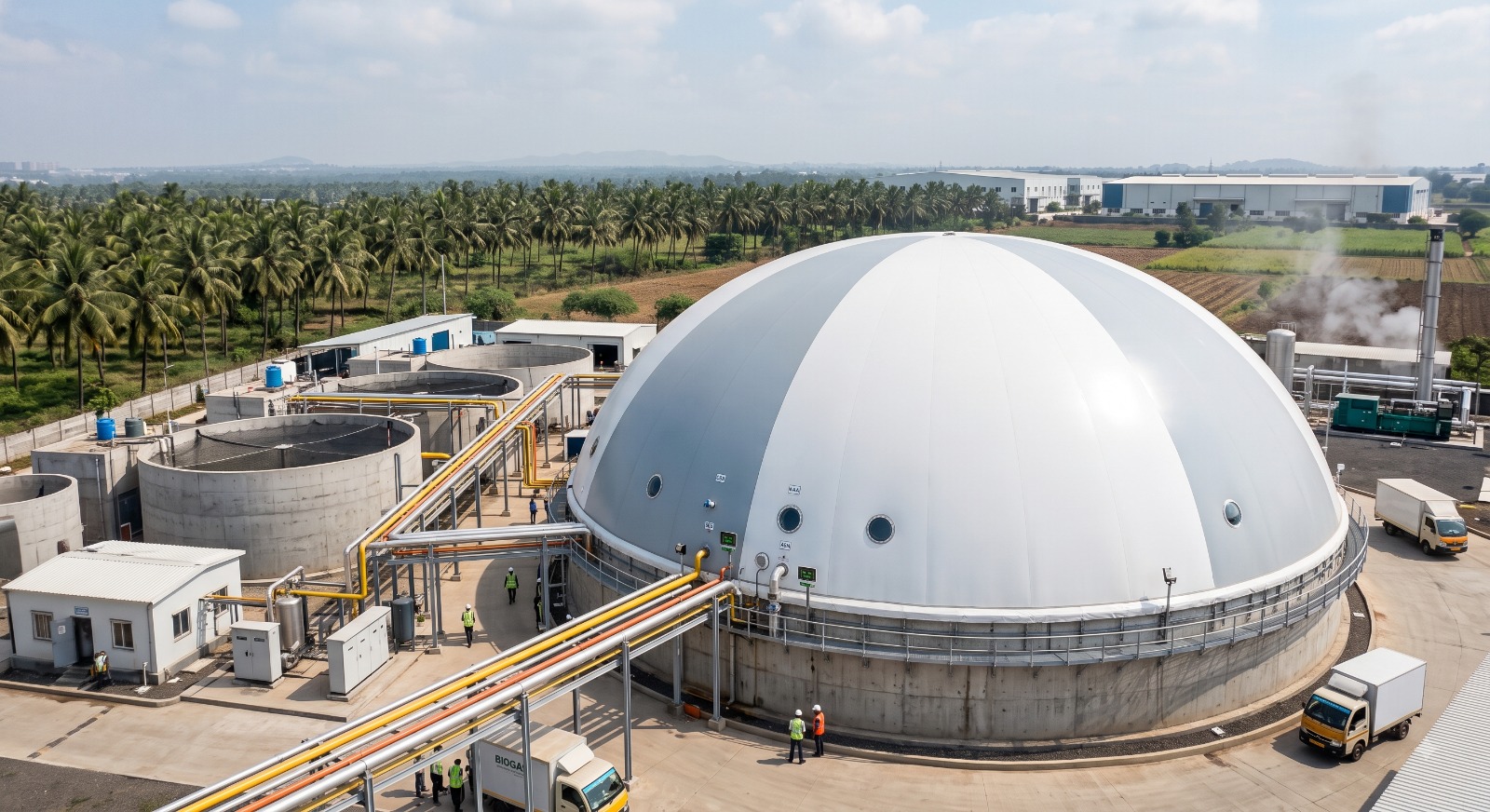
If you've come across the term "membrane biogas dome" while researching biogas systems, you're probably trying to figure out whether it's a fancy name for the same old biogas cover, or something genuinely different. It's a fair question, and honestly, one that trips up a lot of people early in their research.
Let's start from the basics and build up from there.
What Is a Membrane Biogas Dome?
A membrane biogas dome is a flexible, gas-tight cover made from engineered fabric — usually PVC or PVDF coated polyester — that sits over an anaerobic digester to capture and store biogas as it's produced. Instead of a rigid steel or concrete dome, it uses a durable, flexible membrane that expands and contracts as gas volume inside changes.
Think of it less like a fixed roof and more like a giant, weather-resistant balloon that breathes with the gas output of the digester underneath it.
This design has become popular across dairy farms, food waste plants, municipal wastewater facilities, and agricultural biogas setups because it solves a problem that older rigid covers struggled with — handling fluctuating gas volumes without cracking, corroding, or needing constant structural reinforcement.
How Does a Membrane Biogas Dome Actually Work?
The working principle is fairly straightforward once you break it down:
- Gas production — Organic waste breaks down inside the digester, releasing biogas (mostly methane and CO2)
- Gas capture — The membrane dome sits sealed over the digester, capturing gas as it rises
- Volume flexibility — As gas accumulates, the dome expands slightly; as gas is drawn off for use, it contracts
- Pressure regulation — The membrane material and design maintain steady internal pressure, protecting the system from over-pressurization
- Gas extraction — A connected outlet draws gas for use in generators, boilers, or upgrading units
The membrane essentially acts as both storage and a flexible pressure buffer, which is why fabric quality, seam strength, and UV resistance matter so much for long-term performance. A poorly made membrane won't just wear out faster — it can affect gas pressure consistency across the whole system.
Why Membrane Domes Are Replacing Rigid Covers
Older biogas systems often used steel or concrete gas holders. They worked, but they came with real downsides:
- Higher upfront construction cost
- Corrosion risk from constant gas and moisture exposure
- Limited flexibility to handle variable gas volumes
- Heavier structural load on the digester tank
Membrane systems address most of these issues directly. They're lighter, faster to install, more resistant to the moisture and gas composition inside a digester, and far easier to repair if damage does occur. For plant owners weighing upfront cost against long-term maintenance, this shift makes a lot of practical sense.
Where Membrane Biogas Domes Are Used
This isn't a niche product limited to one type of facility. Common applications include:
- Dairy and livestock farms — treating manure and producing biogas for on-site energy use
- Food and beverage processing plants — managing organic waste streams while generating usable energy
- Municipal wastewater treatment plants — capturing biogas from sludge digestion
- Agricultural and crop-residue biogas plants — especially common in rural energy programs
- Industrial anaerobic digesters — where consistent gas storage capacity is critical for downstream use
Each of these settings has different pressure, size, and climate requirements, which is why the membrane specification (thickness, coating, UV protection) needs to be matched to the actual site rather than treated as one generic product.
What to Look for When Sourcing a Membrane Biogas Dome
If you're at the research stage, a few things are worth keeping in mind before you start requesting quotes:
- Fabric coating type (PVC vs PVDF) and its suitability for your climate
- UV and weathering resistance, especially for outdoor installations exposed to direct sun
- Seam welding method, since this affects long-term gas-tightness
- Manufacturer experience, particularly with biogas-specific applications rather than general tarpaulin or tent fabric
This is also where working with an established name matters. As one of the trusted names offering Biodomes Membranes India wide, we've seen how much of a difference proper fabric engineering makes once a dome has been in the field for a few years, not just on day one. Whether you're comparing options for a small farm digester or a larger municipal facility, sourcing genuine Membrane Biogas Dome India manufacturing rather than generic imported covers tends to pay off in durability and service support down the line.
Wrapping Up
A membrane biogas dome isn't just a cover — it's an active part of how a biogas system manages pressure, storage, and long-term reliability. Understanding how it works makes it a lot easier to evaluate suppliers, compare specifications, and avoid choosing based on price alone.
If this is your first time researching biogas dome options, it's worth spending time understanding the fabric and engineering side before moving to vendor comparisons — the specifications you choose now will directly affect how the system performs for years. At Biodomes, this is the kind of groundwork we walk new customers through before ever getting to a quote.
FAQs
Q1. Is a membrane biogas dome the same as a biogas balloon?
They're closely related. "Biogas balloon" is often used informally for the same flexible membrane cover technology.
Q2. How long does a membrane biogas dome typically last?
With good quality fabric and proper maintenance, most membrane domes last 8–12 years, depending on climate and usage.
Q3. Can a membrane biogas dome be installed on an existing digester?
In most cases, yes — membrane domes can be retrofitted onto existing digester tanks with the right sizing and fittings.
Q4. Do membrane domes work in extreme weather?
Quality membranes with UV-resistant coatings are designed to handle sun, rain, and temperature variation, though extreme conditions may call for specific fabric specs.
Q5. What size digesters can use a membrane biogas dome?
Membrane domes are used across a wide range, from small farm-scale digesters to large municipal and industrial installations.
If you're exploring biogas dome options for an upcoming project, understanding the basics covered here is a solid starting point before comparing manufacturers and specifications in detail.