
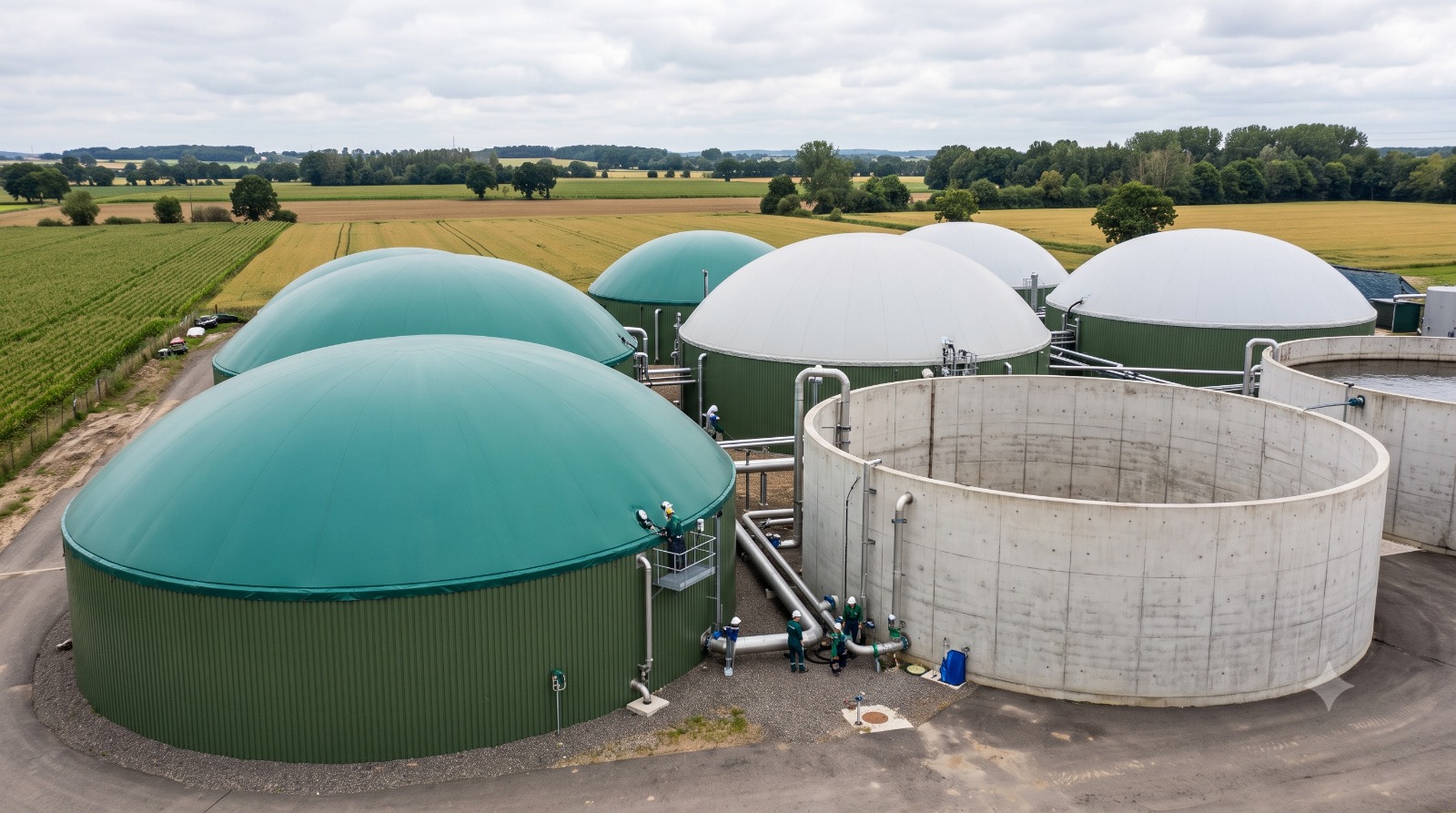
What Is a Membrane Biogas Dome? A Beginner's Guide
If you're just starting to explore biogas systems, you've probably come across the term "membrane biogas dome" and wondered what it actually means. This guide breaks it down in simple terms — what a membrane biogas dome is, how it works, and why it's become such a common choice for biogas plant setups.
What Is a Membrane Biogas Dome?
A membrane biogas dome is a flexible, gas-tight cover placed over a biogas digester tank. Instead of a rigid concrete or steel dome, it uses an engineered coated fabric membrane that stretches over the digester to store the gas produced during the anaerobic digestion process.
Think of it as a large, durable balloon-like cover that rises and falls slightly as gas builds up and gets drawn off for use. It's lightweight, flexible, and built to hold pressure safely over long periods of use.
How Does It Work?
Here's the basic idea behind biogas dome basics:
- Organic waste (like agricultural residue, food waste, or animal manure) is fed into an anaerobic digester
- Inside the digester, bacteria break down this waste in the absence of oxygen, producing biogas
- The membrane dome sits above the digester and captures this gas as it's produced
- As gas accumulates, the membrane expands slightly, acting as flexible storage
- Gas is drawn out through connected pipelines for use in power generation, cooking, or heating
This is why it's often called membrane gas storage — the dome isn't just a cover, it's actively storing gas until it's needed.
Why Use a Membrane Dome Instead of a Rigid Cover?
Traditional anaerobic digester dome covers were often made of steel or concrete. Membrane domes have become popular because they offer a few practical advantages:
- Flexible gas storage – the membrane naturally expands and contracts with gas volume, so there's no need for separate storage tanks
- Lightweight design – much easier to install compared to rigid structures
- Weather resistance – a good coated membrane handles UV exposure, rain, and temperature changes well
- Long-term durability – engineered fabric is built to withstand constant flexing without weakening
- Lower maintenance – fewer moving parts and no risk of rust like with metal covers
Where Are Membrane Biogas Domes Used?
Membrane biogas domes are used across a wide range of biogas plant setups, including:
- Agricultural and farm-based biogas plants
- Dairy and cattle waste digesters
- Food waste and municipal biogas facilities
- Industrial wastewater treatment plants
- Community-scale biogas projects
Whether it's a small farm setup or a larger industrial digester, the same basic membrane technology applies — just scaled to fit the project.
What Makes a Good Membrane for Biogas Domes?
Not every fabric is suited for this kind of continuous, high-stress application. A good membrane needs to be:
- Gas-tight, so it holds pressure without leaking
- Resistant to UV and weather, since domes sit outdoors long-term
- Strong enough to flex daily without tearing or weakening at the seams
- Easy to weld into large, seamless panels for bigger digesters
This is exactly the kind of engineered coated fabric that goes into building a reliable membrane biogas dome India-wide — from small farm digesters to larger municipal projects.
Getting Started with a Membrane Biogas Dome
If you're planning a biogas plant setup, the membrane you choose plays a big role in how well the system performs over time. Biodomes works with engineered coated fabric built specifically for membrane biogas dome applications, designed to handle the daily flexing and outdoor exposure these systems go through.
Getting the fabric right at the planning stage saves a lot of trouble later, which is why it's worth talking to a team that understands both the material and how biogas systems actually work — like Biodomes.
FAQs
What is a membrane biogas dome made of?
It's made from an engineered, coated fabric membrane designed to be gas-tight, weather-resistant, and durable enough for daily flexing.
How long does a membrane biogas dome last?
With good quality fabric and proper care, membrane domes are built to perform reliably over long-term outdoor use.
Is a membrane dome better than a fixed steel cover?
For most biogas plant setups, yes — it's lighter, easier to install, needs less maintenance, and naturally adjusts to gas volume changes.
Can membrane biogas domes be customised for different plant sizes?
Yes, the membrane can be engineered and sized to fit different digester tank sizes, from small farm setups to larger industrial plants.