
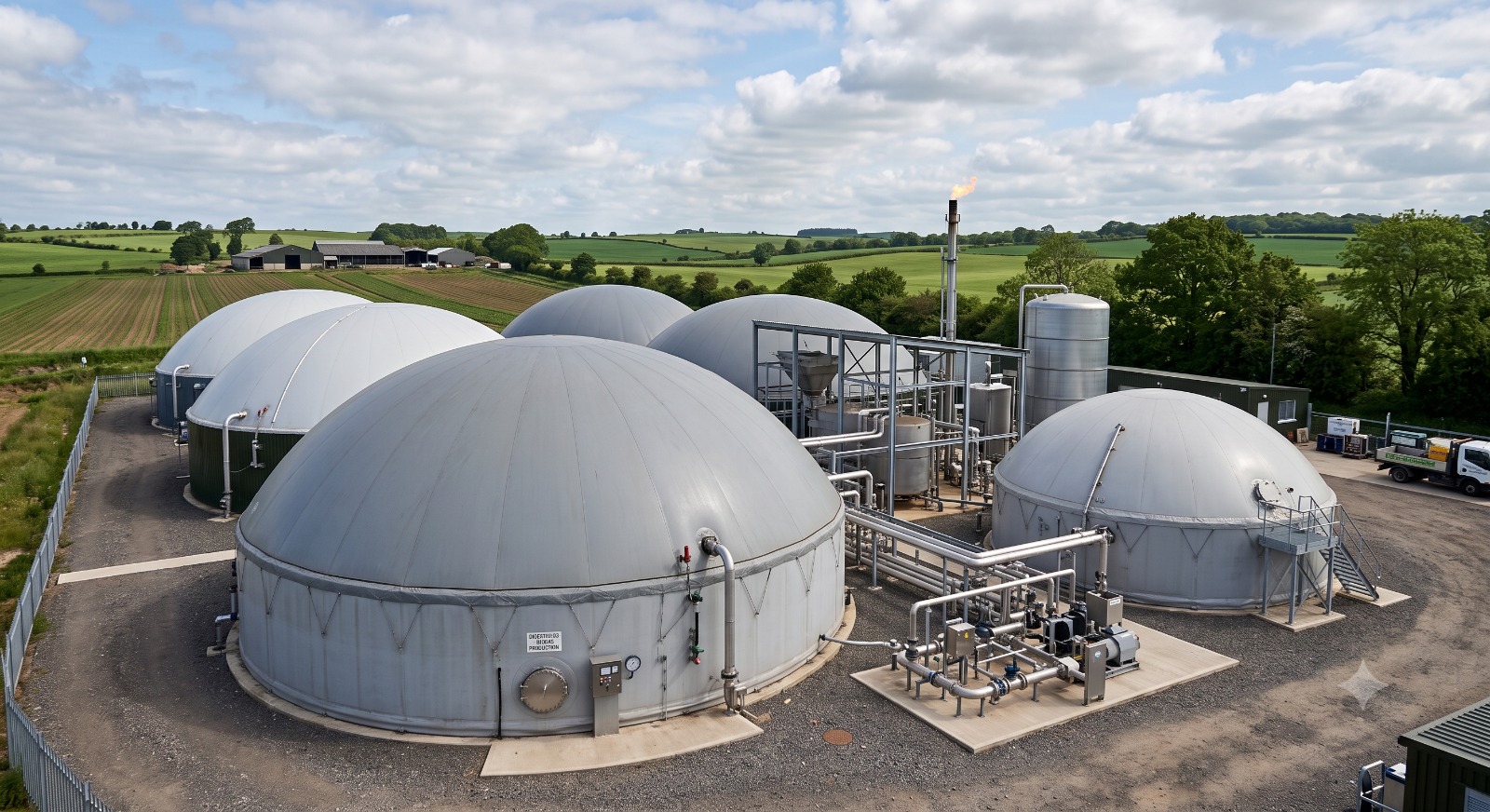
A biogas dome only works if the material covering it does its job for years without failing: holding gas pressure, resisting UV and weather, and staying flexible through constant expansion and contraction. That material is PVC coated fabric, and how it's manufactured has a direct bearing on how long a biogas dome actually lasts in the field.
How PVC Coated Fabric Is Made
PVC coated fabric starts with a base textile, typically a high-tenacity woven polyester scrim, which gives the material its tensile strength and tear resistance. This base fabric is then coated on both sides with layers of PVC compound, calendered or laminated under controlled heat and pressure so the coating bonds evenly across the entire surface. The number of coating layers, their thickness, and the additives blended into the PVC (UV stabilisers, plasticisers, anti-fungal agents) all get tuned specifically for the end application. For gas storage, that means prioritising gas-tightness, seam weldability, and long-term flexibility over raw thickness alone.
What Makes a Coated Fabric Suitable for Gas Storage
Not every coated fabric is built for biogas dome covers. A few properties matter more than the rest here:
- Gas impermeability: the coating has to form a continuous, pinhole-free barrier so biogas doesn't slowly leak out through the fabric itself.
- Seam weldability: biogas domes are large single structures assembled from multiple fabric panels, so the material needs to weld into airtight seams via RF or hot-air welding rather than relying on stitching or adhesives alone.
- UV and weather stability: domes sit outdoors permanently, so the coating needs to resist cracking and degradation from continuous sun exposure.
- Flexibility under pressure cycling: as gas volume inside the dome rises and falls daily, the fabric expands and contracts repeatedly, so it needs to stay pliable rather than stiffening or fatiguing over time.
Why Supply Consistency Matters as Much as Manufacturing
A biogas dome is typically built from one continuous roll or a matched set of fabric panels. If the coating thickness or formulation varies from batch to batch, the finished dome can end up with inconsistent gas-tightness or uneven ageing across its surface. This is why sourcing PVC coated fabric from a consistent, quality-controlled manufacturer matters just as much as the coating formulation itself; installers and EPC contractors building biogas plants need to know that every roll performs the same way.
Sourcing PVC Coated Fabric for Biogas Projects
For installers, fabricators, and biogas plant developers, working with a dedicated coated fabric manufacturer and supplier means access to consistent material specifications, batch testing, and technical support tailored to gas storage applications, rather than a generic tarpaulin-grade fabric repurposed for a job it wasn't engineered for.
Biodomes supplies PVC coated fabric manufactured specifically for biogas dome covers and gas storage applications, with the coating formulation and seam weldability built around long-term outdoor gas containment. As a trusted name in Biogas Dome India projects, Biodomes, part of Biodomes Membranes India, works directly with installers and EPC contractors on fabric specification and supply.
FAQs
How long does PVC coated fabric last on a biogas dome?
With a properly formulated coating and correct installation, PVC coated fabric on biogas domes commonly performs for many years before recoating or replacement is needed.
Can PVC coated fabric be repaired if it's damaged after installation?
Yes. PVC coated fabric can typically be field-repaired using hot-air or solvent welding to patch small tears or punctures without replacing the whole panel.
What's the difference between PVC coated fabric and a PVC tarpaulin?
While both use a similar coating chemistry, fabric engineered for gas storage is formulated and tested specifically for gas impermeability and seam weldability, unlike general-purpose tarpaulin fabric.
Is PVC coated fabric suitable for all climates?
Yes, when properly UV-stabilised and formulated, PVC coated fabric performs across a wide range of climates, though extreme conditions may call for a specific coating grade.