
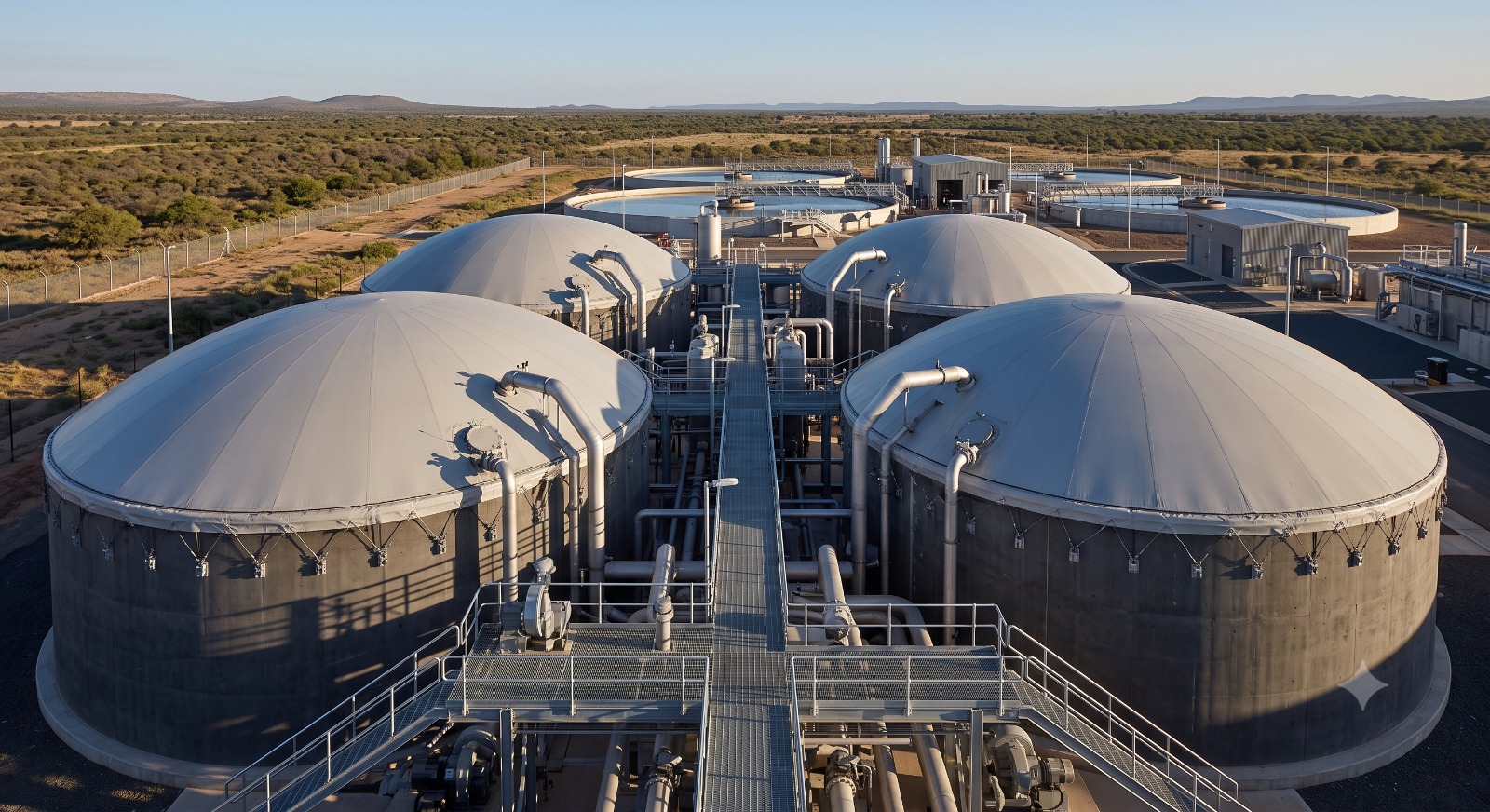
PVC Coated Fabric for Biogas Domes: What Fabricators Should Know
If you're a fabricator, tent-maker, or converter sourcing coated fabric for biogas membrane work, PVC coated fabric is usually where the conversation starts — and for good reason. It's the material most digester mounted dome projects are built on, thanks to how well it welds, flexes, and holds up over years of outdoor use. This piece looks mainly at what makes PVC coated fabric work so well for biogas membranes, with PVDF covered as the alternative worth knowing about for harsher-exposure sites.
This is purely about the raw material itself. Not the finished dome, not the installation — just the fabric you're buying, welding, and building with.
What Actually Makes Up a Coated Biogas Fabric
Before getting into PVC specifically, it helps to know what's actually layered into a technical textile fabric for biogas use:
- Base cloth — usually a high-tenacity polyester weave that gives the fabric its tensile strength and tear resistance
- Coating layers — PVC applied in multiple passes to build up thickness and gas-tightness
- Lacquer/top-coat sealing — a final protective layer that shields the coating from UV exposure, weathering, and biogas contact over years of outdoor use
These layers together are what decide how well a technical textile fabric for biogas use holds up to constant gas pressure and years of outdoor exposure on a digester tank.
PVC Coated Fabric: The Standard Choice for Biogas Domes
PVC coating has been the backbone of the technical textile industry for decades, and it remains the default choice for most digester mounted dome projects. It bonds cleanly to polyester base cloth, welds reliably at seams, and stays flexible across a wide temperature range without becoming brittle.
A few reasons PVC coated fabric works so well for biogas membrane use:
- Strong seam-weld consistency, which matters when you're joining multiple fabric widths into one dome-sized membrane
- Proven long-term performance in moderate climates, with a track record spanning decades of outdoor installations
- Cost-efficiency compared to specialty top-coats, without giving up the mechanical strength needed for gas-tight construction
- Reliable flexibility through repeated expansion and contraction as internal gas pressure fluctuates
For the majority of digester mounted dome sites, PVC coated fabric covers what's needed — solid biogas membrane fabric durability, dependable welding, and a coating that's well understood by fabricators everywhere.
PVDF Coated Fabric: The Alternative for Harsher Exposure
PVDF is typically applied as a top-coat over a PVC base rather than replacing it outright. It adds an extra layer of resistance to UV degradation, chemical exposure, and surface dirt pickup. For sites in high-UV zones, industrial atmospheres, or locations with more aggressive weathering, that additional top-coat can extend the usable life of the fabric surface without changing the core mechanical properties of the base cloth underneath.
The PVDF coating vs PVC coating decision generally comes down to site exposure — PVC handles most standard installations well, while PVDF is worth considering when the site conditions are unusually demanding.
Why the Fabric Matters More for Digester Mounted Domes
Digester mounted domes are a specific use case worth calling out separately. Unlike free-standing tensile structures, these domes sit directly on top of steel or RCC digester tanks, which means the fabric has to handle a few extra demands:
- Engineered welding at the seams to resist wind-load pulling at the anchor points around the tank rim
- Consistent gas-tightness across the full welded panel, since any weak seam directly affects biogas capture
- Long-term flexibility to handle the dome's constant expansion and contraction as internal gas pressure fluctuates
This is exactly why fabricators building a digester mounted dome pay close attention to base cloth quality and coating layers before they even get to welding — the raw fabric has to be right from the start.
Why Choose Biodomes
Biodomes Membranes India supplies PVC coated fabric as a raw material for fabricators, tent-makers, and converters working on biogas membrane and digester mounted dome projects — not just complete, finished domes. The fabric is built with multiple coating passes and lacquer sealing designed to hold up to years of outdoor gas-tank exposure, and a PVDF top-coat option is available for sites that need the extra protection. If you're sourcing coated fabric rather than a finished structure, Biodomes is set up to work directly with converters at the raw-material stage. You can see the full fabric range at biodomes.in.
FAQs
Why is PVC coated fabric the standard choice for biogas domes?
PVC coating welds reliably, stays flexible across a wide temperature range, and has decades of proven performance in outdoor digester dome installations, making it the default choice for most fabricators.
Is PVDF coated fabric better than PVC for biogas domes?
Not universally — PVDF adds extra UV and weathering resistance as a top-coat over a PVC base, which helps in harsher outdoor conditions, while PVC coated fabric on its own performs reliably in moderate climates at a lower cost.
What decides the strength of a biogas membrane fabric?
Strength mainly comes down to the base cloth quality, the number of coating passes applied, and how well the lacquer top-coat is sealed, since these together determine how the fabric holds up under constant gas pressure and outdoor exposure.
Can fabricators buy the coated fabric as raw material instead of a finished dome?
Yes. Biodomes Membranes India supplies coated fabric rolls directly to fabricators, tent-makers, and converters who weld and build their own structures, rather than only selling complete finished domes.