
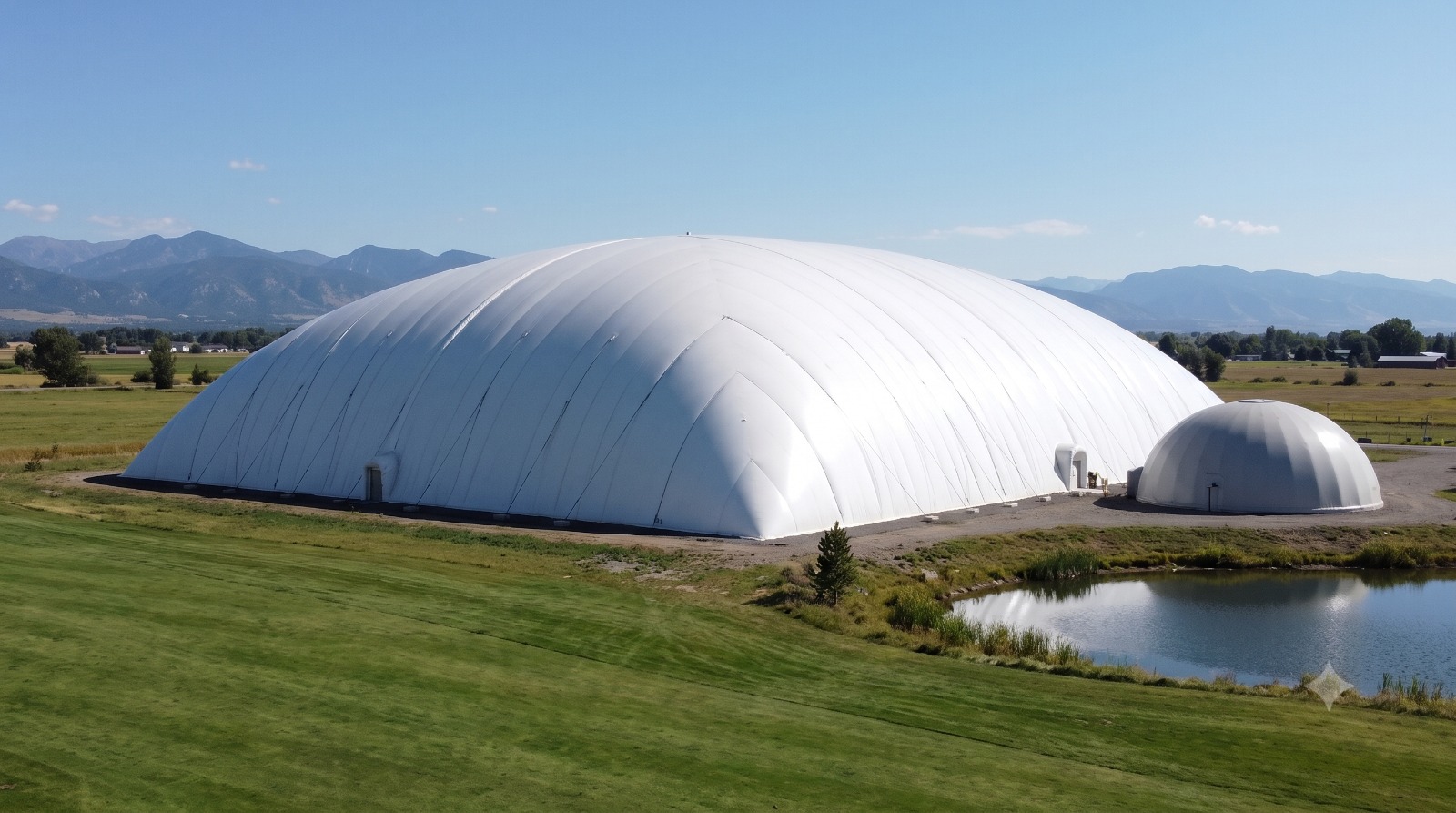
If you're planning a Double Membrane Air Dome — for biogas storage, industrial covers, or any inflatable structure meant to last for years — one of the first real decisions you'll run into is the coated fabric itself. Specifically, PVC or PVDF. Both are proven materials, both show up across biogas and air dome projects worldwide, and both have genuinely good reasons to be chosen. The right answer really comes down to what your project needs from it long-term.
This guide walks through what PVC and PVDF coated fabric actually are, how they differ in composition and coating, and what that means for a Double Membrane Air Dome's durability over its working life.
A Quick Refresher: How Double Membrane Air Domes Work
A Double Membrane Air Dome uses two layers of coated technical textile fabric with air maintained between them, usually by a small blower system. This double-layer design gives the structure insulation, structural stability, and a level of redundancy — the outer membrane handles weather and UV exposure, while the inner membrane helps regulate internal conditions, particularly important for biogas membrane fabric applications where gas containment and structural consistency both matter.
The fabric choice for these membranes has a direct impact on how long the dome performs well before recoating or replacement becomes necessary.
What Is PVC Coated Fabric?
PVC (polyvinyl chloride) coated fabric consists of a woven polyester base coated with layers of PVC, often finished with UV stabilizers and sometimes an additional lacquer top coat. It's a well-established, widely available option with a long track record in tensile structures, tarpaulins, and dome membranes.
Typical strengths:
- Cost-effective for large-scale coverage
- Good flexibility, easy to fabricate and weld
- Reliable short-to-medium term UV and weather resistance
- Wide range of coated fabric GSM options depending on load and structural requirements
What Is PVDF Coated Fabric?
PVDF (polyvinylidene fluoride) is typically applied as a top-layer coating over a PVC-coated base, rather than replacing PVC entirely. This combination is sometimes referred to as PVC/PVDF coated fabric, and it's specifically designed to extend the surface performance of the membrane.
Typical strengths:
- Superior long-term UV and weathering resistance
- Self-cleaning surface properties, since dirt and biofilm adhere less easily
- Better resistance to yellowing and surface chalking over time
- Often specified for projects expecting a longer structural lifespan with less recoating
PVC vs PVDF: Where the Real Difference Shows Up
The core fabric strength and weave in both cases can be very similar — the meaningful difference is in the coating's surface behavior over time.
- UV exposure: PVDF-coated surfaces generally hold their appearance and flexibility longer under continuous sun exposure, which matters for domes that stay installed for many years.
- Maintenance: PVDF's self-cleaning surface reduces how often the membrane needs manual cleaning, which is a practical consideration for large-format double membrane structures that aren't easy to access.
- Upfront cost vs. lifecycle cost: PVC is typically the more budget-friendly option initially, while PVDF's added durability can reduce maintenance and recoating costs across the structure's lifespan.
- Climate considerations: In regions with intense, prolonged UV exposure or high pollution/dust levels, PVDF's surface properties tend to hold up more consistently over the years.
Neither option is universally "better" — the right choice depends on project location, expected service life, budget structure, and how much ongoing maintenance is realistic for the site.
Choosing Fabric GSM and Specification for Biogas Membranes
Beyond the PVC vs PVDF decision, coated fabric GSM (grams per square meter) plays a major role in structural performance. Heavier GSM generally means higher tensile strength and puncture resistance, but also more weight for the support structure to manage. For biogas membrane fabric specifically, the specification needs to account for internal gas pressure, dome size, and local wind and weather loading — which is why GSM and coating type are usually decided together, not separately.
Why This Decision Matters for Long-Term Durability
A Double Membrane Air Dome is a long-term structural investment, and the coated fabric is effectively the skin protecting everything underneath it. Getting the material specification right at the outset — rather than defaulting to whatever's cheapest has a direct effect on how many years the structure performs without significant intervention.
This is where working with an experienced technical textile fabric supplier for biogas applications makes a real difference, since the right recommendation depends on understanding both the coating science and the specific demands of the installation site.
Biodomes Membranes India works with project teams to specify the right coated fabric — PVC or PVDF for Double Membrane Air Dome projects, factoring in GSM, climate exposure, and expected structural lifespan rather than a one-size-fits-all approach.
Frequently Asked Questions
Is PVDF coated fabric always better than PVC for air domes?
Not necessarily. PVDF offers better long-term UV and self-cleaning performance, but PVC remains a strong, cost-effective choice for many projects depending on climate and expected service life.
What GSM is typically used for biogas dome membranes?
It varies by dome size and pressure requirements, so GSM is generally specified per project rather than following a single standard figure.
Can PVDF coating be added to an existing PVC fabric structure?
PVDF is applied as a coating layer during fabric manufacturing, so it needs to be specified before the membrane is produced rather than added afterward.
Does the outer and inner membrane need the same coating?
Not always — some projects use a more weather-resistant coating on the outer membrane and a standard PVC coating on the inner layer, depending on budget and performance needs.