
What Is a PVDF Dual Membrane for Gas Dome? A Beginner's Guide
If you've come across the term "PVDF dual membrane for gas dome" while researching biogas storage or covered lagoon systems, you're likely trying to understand a piece of technology that isn't widely explained in simple terms. This guide breaks down what a PVDF dual membrane for gas dome actually is, how it functions, and where it's typically used — a good starting point before diving into more technical specifications or supplier comparisons.
What Is a PVDF Dual Membrane for Gas Dome?
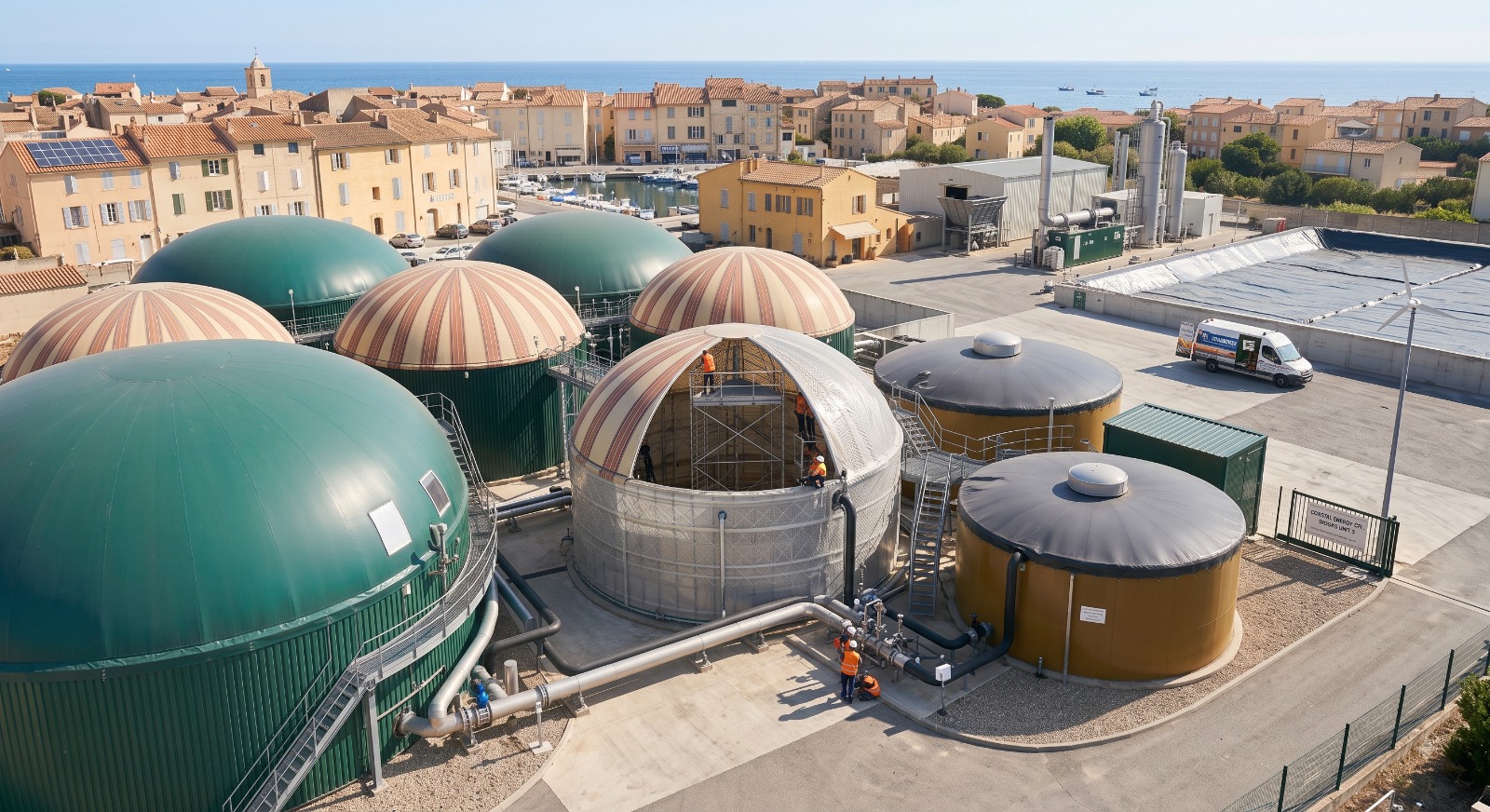
A PVDF dual membrane for gas dome is a two-layer fabric structure used to store and contain biogas produced from anaerobic digestion — commonly in biogas plants, wastewater treatment facilities, and agricultural digesters. Instead of a rigid steel or concrete gas holder, the system uses two flexible membrane layers made from PVDF-coated (polyvinylidene fluoride) fabric, forming a dome-shaped structure over a digester tank or covered lagoon.
The "dual" part of the name refers to its two-membrane design:
- Outer membrane — a weatherproof, UV-resistant layer that protects against sun, rain, and mechanical stress
- Inner membrane — a flexible gas-holding layer that expands and contracts as biogas is produced and drawn off
Air is maintained between the two layers using a small blower system, which keeps the outer membrane taut and gives the dome its recognizable rounded shape, while the inner membrane moves freely to accommodate changing gas volume.
Why PVDF Specifically?
Not all membrane materials perform the same way in a biogas environment. PVDF coating is chosen for gas dome applications because it offers:
- Strong resistance to UV degradation from prolonged outdoor exposure
- Chemical resistance to hydrogen sulfide and other corrosive gases present in biogas
- Long-term flexibility without cracking or stiffening over years of use
- Durability across a wide temperature range, from cold winters to hot summers
Compared to standard PVC membranes, PVDF-coated fabric generally holds up better under continuous chemical exposure, which is why it's increasingly specified for long-service biogas storage rather than short-term applications.
How Does a PVDF Dual Membrane for Gas Dome Work?
The system works through a straightforward but carefully engineered process:
- Biogas generation — Anaerobic digestion inside the tank or lagoon produces biogas (primarily methane and CO2) continuously.
- Gas collection — The biogas rises and is captured under the inner membrane, causing it to inflate as gas accumulates.
- Pressure regulation — As gas is drawn off for use (power generation, heating, flaring), the inner membrane deflates accordingly, maintaining a buffer of stored gas at a manageable pressure.
- Structural support — The outer membrane, kept inflated by a separate low-pressure air blower, maintains the dome's shape and protects the inner gas-holding layer from weather and UV exposure.
- Safety and pressure control — Pressure relief valves and monitoring systems prevent over-pressurization, keeping the system operating within safe limits.
This design allows the gas storage volume to flex naturally with production and demand, rather than requiring a fixed-volume rigid tank.
Where Is a PVDF Dual Membrane Gas Dome Used?
This type of membrane system shows up across a range of applications:
- Agricultural biogas plants — storing biogas generated from livestock manure or crop waste digesters
- Municipal and industrial wastewater treatment — capturing biogas produced during sludge digestion
- Covered anaerobic lagoons — used in dairy farms and food-processing facilities to both contain odor and capture usable gas
- Community and decentralized biogas systems — smaller-scale digesters serving local energy needs
- Industrial biogas-to-energy projects — where stored gas feeds into generators or boilers on a continuous basis
Across all these use cases, the core advantage is the same: a lightweight, flexible, and relatively low-maintenance alternative to rigid steel gas holders, with lower installation costs and faster deployment.
Why Fleet-Scale and Plant Operators Are Moving Toward Membrane Gas Domes
Traditional steel gas holders are expensive to fabricate, prone to corrosion from biogas exposure, and difficult to modify once installed. A PVDF dual membrane system, by contrast, can be installed faster, resists the corrosive components of biogas more effectively over time, and is easier to repair or replace in sections if needed. For plant operators managing budgets and installation timelines, this often makes membrane-based gas domes the more practical long-term choice.
Where This Fits in Your Research
This overview is meant as a starting point. If you're evaluating this technology for a specific project, the next questions worth exploring are typically around sizing the membrane for your digester's gas volume, comparing PVDF against other coating options, and understanding installation and maintenance requirements in more detail.
Biodomes Membranes India works specifically in this space, manufacturing PVDF dual membrane gas dome systems for biogas plants, wastewater facilities, and covered lagoon projects across India. If you're at the early research stage, it's worth exploring the fabric specifications and project examples available through Biodomes Membranes India as a reference point before comparing suppliers.
Frequently Asked Questions
Q: What is the difference between a single membrane and a dual membrane gas dome?
A: A single membrane system uses one layer that must handle both weatherproofing and gas containment, while a dual membrane system separates these functions — an outer protective layer and an inner gas-holding layer — generally offering better durability and gas pressure control.
Q: How long does a PVDF membrane gas dome typically last?
A: Service life depends on fabric grade, installation quality, and environmental conditions, but PVDF-coated membranes are generally selected for their long-term resistance to UV and chemical degradation compared to standard PVC.
Q: Can a PVDF dual membrane gas dome be installed on an existing digester tank?
A: In many cases, yes — membrane dome systems can be retrofitted onto existing tanks or lagoons, though this depends on the tank's structure and dimensions.
Q: Is a PVDF membrane gas dome safe for storing biogas?
A: When properly engineered with pressure relief valves and monitoring systems, membrane gas domes are designed to store biogas safely within controlled pressure ranges.
Q: How is gas volume controlled in a dual membrane system?
A: The inner membrane expands and contracts naturally as gas is produced and withdrawn, while the outer membrane's air pressure is maintained separately by a blower system to preserve the dome's shape.