
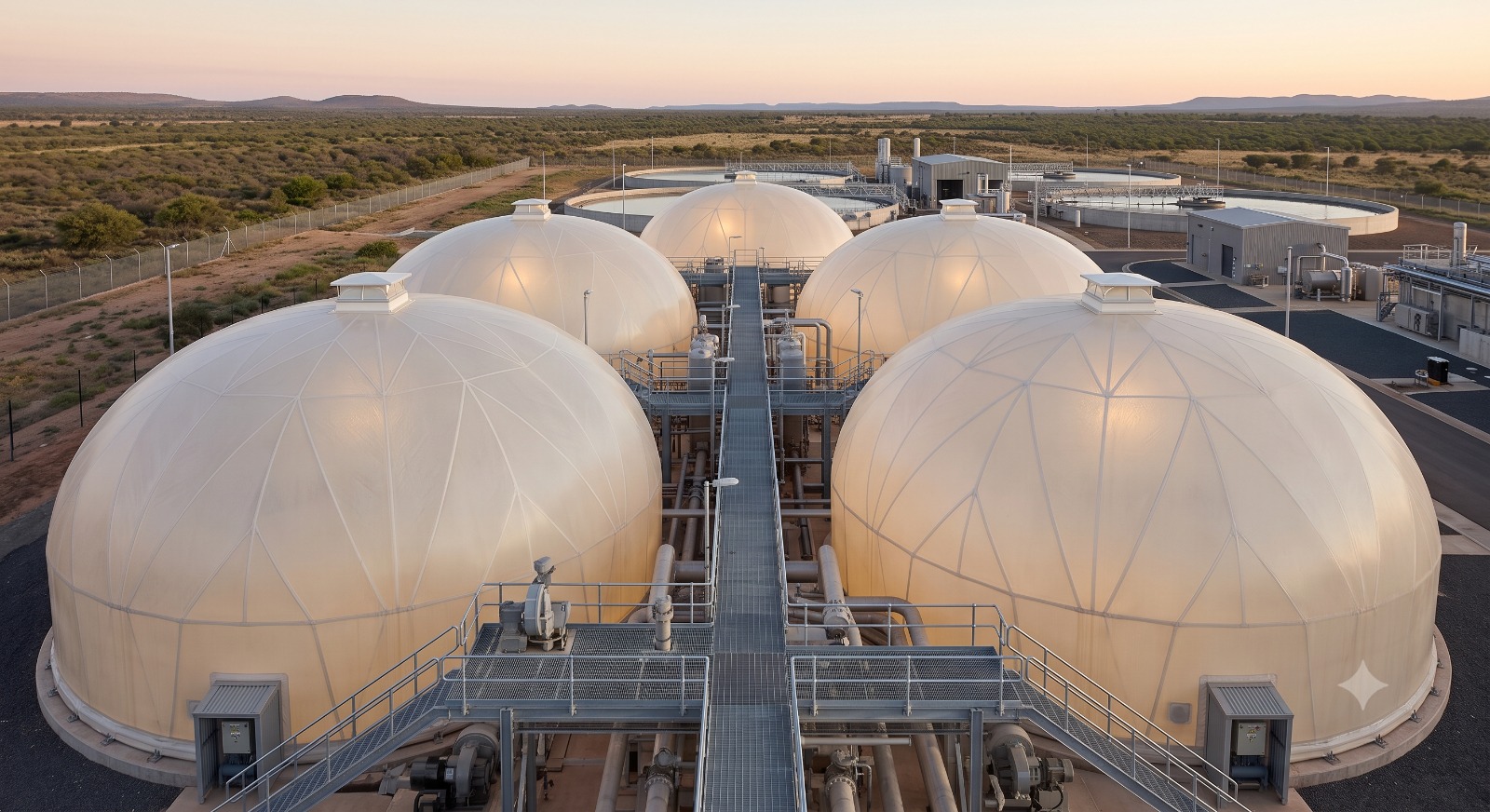
An air dome looks simple from the outside — just a large inflated shape holding its form against wind and weather. But if you've ever seen one collapse or discolor within a couple of years, you know the fabric underneath is doing all the real work. Get that fabric wrong, and no amount of good engineering saves the structure.
At Biodomes, we spend most of our time thinking about exactly this — the membrane, not just the dome shape sitting on top of it.
What Makes a PVDF Membrane Air Dome Different
A PVDF membrane air dome relies on a fabric that's been coated with polyvinylidene fluoride, a fluoropolymer layer applied over a base cloth (usually polyester). This coating is what separates a dome that lasts 15+ years outdoors from one that starts breaking down within a couple of seasons.
Unlike a plain PVC-coated fabric, the PVDF top layer acts almost like a shield. It doesn't just repel water — it resists the slow surface breakdown that comes from years of constant sun exposure, dust, and pollution settling on an outdoor structure day after day.
Why PVDF Air Dome Fabric Handles UV Exposure So Well
Sunlight is quietly one of the toughest things a dome structure has to survive. UV rays break down most plastics over time, causing them to chalk, fade, or turn brittle. This is exactly where PVDF air dome fabric earns its reputation.
The fluoropolymer coating reflects and resists UV radiation far better than standard coatings, which means:
- The fabric surface stays cleaner for longer, since dirt and pollutants don't bond as easily
- Color and surface finish hold up without the chalky fading common in cheaper materials
- The base fabric underneath stays protected, so the whole membrane ages more slowly
For domes that sit outdoors year-round — think biogas covers, water treatment enclosures, or agricultural storage — this UV resistance often matters more than any other single property.
Fluoropolymer Fabric and Long-Term Weatherproofing
The term fluoropolymer fabric covers more than just sun resistance. This chemistry also holds up well against:
- Heavy monsoon rain and standing water exposure
- Temperature swings between scorching afternoons and cool nights
- Airborne chemicals and industrial dust in certain installation sites
- Fungal or algae growth in consistently humid regions
Put together, this is what makes the fabric genuinely weatherproof rather than just water-resistant. A membrane can technically block rain and still fail years early if it can't handle everything else the outdoors throws at it.
Weatherproof Dome Fabric: What Actually Determines Lifespan
A lot of buyers assume dome lifespan is mostly about the frame or the inflation system. In reality, the weatherproof dome fabric itself is usually the limiting factor. Three things tend to matter most:
- Coating thickness and quality — a thin or inconsistent coating wears through faster
- Base fabric strength — the woven cloth underneath needs to hold tensile load without stretching out of shape
- Seam and weld integrity — most membrane failures start at a seam, not across the flat panel
A well-made PVDF membrane, properly welded and installed, can realistically stay in service for well over a decade with only routine cleaning and inspection.
Biodomes Membranes India — Built for the Long Haul
As part of Biodomes Membranes India, we've focused specifically on getting this fabric right for outdoor, long-duration use — not just supplying a generic coated cloth and calling it dome-ready. Every roll goes through the same coating and testing process, so the fabric performing on day one keeps performing at year ten.
For anyone comparing options for a PVDF Membrane Air Dome India project, the fabric spec is worth more attention than the dome shape or size. A well-chosen membrane quietly does its job for years; a poorly chosen one becomes a maintenance problem within a couple of seasons.
Frequently Asked Questions
Q: How long does a PVDF membrane air dome typically last?
With proper coating quality and installation, most PVDF membrane domes last 15–20 years with routine cleaning and inspection.
Q: Is PVDF coating necessary for every air dome application?
It's most valuable for domes with long-term, continuous outdoor exposure. Structures used briefly or seasonally may not need the same level of UV resistance.
Q: Does PVDF fabric need special maintenance?
Not really — periodic cleaning to remove surface dust and occasional seam inspection is usually enough to keep the membrane performing well.
Q: Can PVDF membrane fabric handle extreme heat and heavy monsoon conditions?
Yes, this is one of its core strengths. The coating is specifically suited to climates with intense sun exposure alternating with heavy seasonal rainfall.