
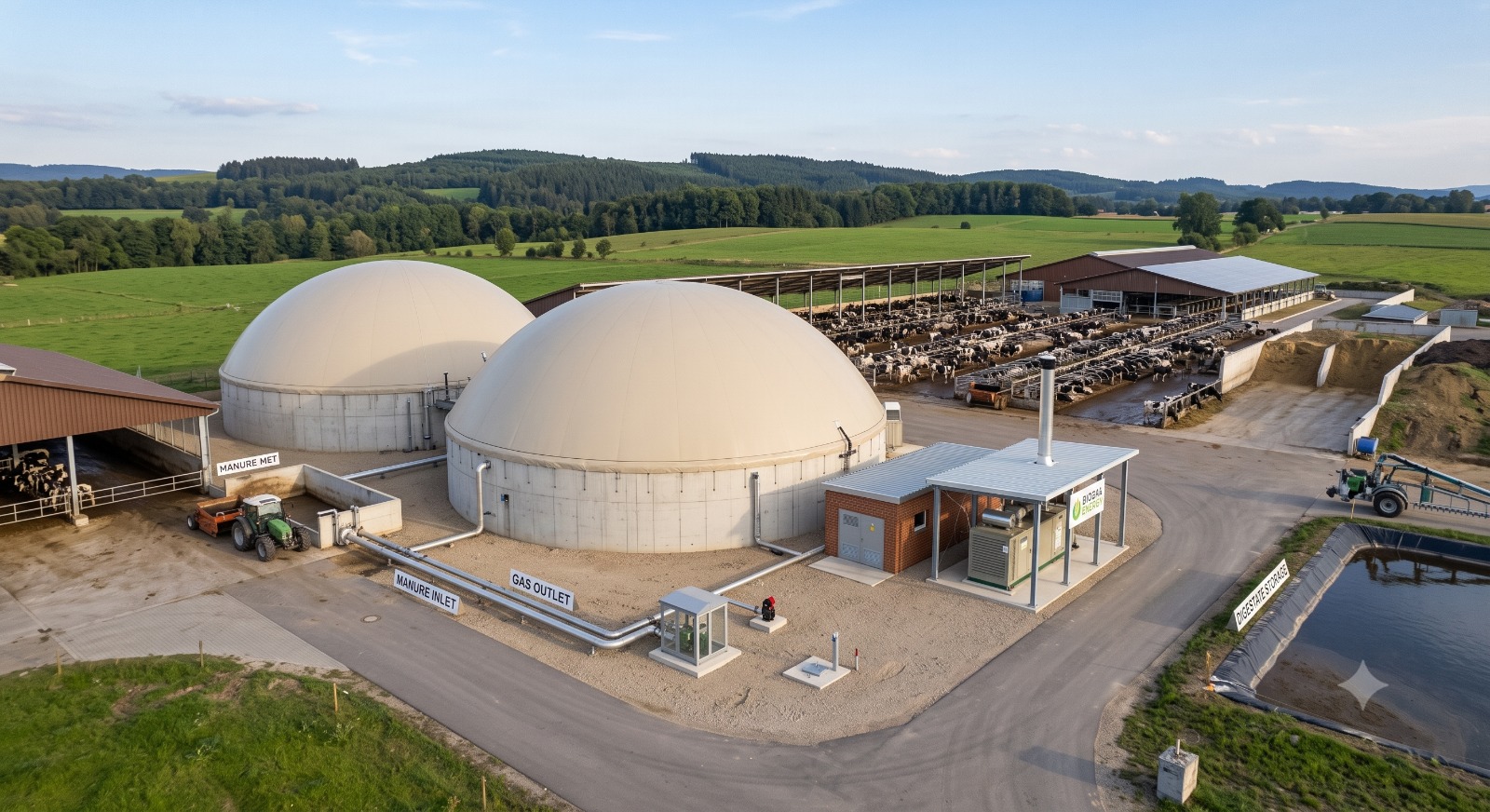
If you run a dairy farm, you already deal with manure every single day — usually as waste that needs to be managed, stored, and disposed of. But there's a simple shift happening across dairy operations in India: that same manure is being turned into usable, clean energy through a biogas dome for dairy farm setups, and it's changing the economics of running a farm.
Let's look at how this works, why it's gaining traction, and what makes the dome itself the most important part of the system.
From Waste Problem to Energy Source
Cattle manure, when left untreated, isn't just an odour and cleanliness issue — it's also a source of methane emissions that would otherwise escape untreated into the atmosphere. A biogas dome captures that manure in a sealed digester system, where naturally occurring bacteria break it down in the absence of oxygen. This process, called anaerobic digestion, produces biogas — a mix of methane and carbon dioxide that can be used directly as fuel.
For a dairy farm, this means:
- Cooking fuel for the farm household or nearby community
- Fuel for generators to produce electricity
- Reduced dependence on LPG or grid power
- A cleaner, better-managed farm environment
- A useful by-product: nutrient-rich slurry that works as organic fertilizer
Why the Dome Itself Matters So Much
A biogas system is only as good as the dome holding the gas. This is where the choice of material becomes critical. The dome needs to:
- Hold gas under pressure without leaking, day after day
- Withstand constant sun exposure without degrading
- Resist punctures and abrasion from farm activity around it
- Stay flexible enough to expand and contract as gas volume changes
- Last for years without needing frequent replacement
This is exactly why more dairy farms are moving away from older brick or concrete digesters toward flexible membrane domes made from coated fabric. A well-made membrane dome is lighter, faster to install, and far more forgiving when it comes to long-term gas retention than rigid alternatives.
Why Farms Across India Are Adopting This
A biogas dome for dairy farm setups is becoming especially relevant in India, where dairy farming operates at every scale — from small household herds to large commercial operations. The appeal isn't just environmental; it's financial. Farms that generate their own fuel and electricity reduce their monthly running costs, and the leftover slurry cuts down spending on chemical fertilizer too.
For farms managing a sizeable herd, the manure output is already there — a biogas dome simply puts it to use instead of letting it go to waste.
What to Look for When Choosing a Biogas Dome
If you're evaluating options for your own dairy farm, a few things are worth checking carefully:
- The coating quality of the membrane fabric used in the dome
- UV and weather resistance suited to your region's climate
- Seam and weld strength, since most failures start at the joints
- The supplier's experience specifically with dairy and agricultural biogas systems
- Ease of installation and ongoing maintenance support
This is where working with an experienced membrane specialist makes a real difference. Biodomes Membranes India focuses specifically on this kind of coated fabric dome, built to handle the day-to-day realities of farm environments rather than just meeting a general spec sheet.
A Practical Step Toward Self-Sufficiency
What makes this approach appealing to dairy farmers isn't complicated technology — it's a straightforward system that takes something already being produced on the farm and turns it into something useful. Less waste sitting around, lower fuel costs, and a farm that runs a little more independently.
For farms exploring this shift, working with a supplier that understands both the biogas process and the material science behind long-lasting domes makes the transition considerably smoother.
Frequently Asked Questions
How much manure is needed to run a biogas dome effectively?
It depends on herd size and the dome's capacity, but even a modest number of cattle can generate enough manure to support a functioning household-scale biogas system.
Is a biogas dome difficult to maintain on a dairy farm?
Not particularly — regular feeding of manure and periodic checks on the dome's seals and pressure are usually all that's needed for smooth operation.
Can a biogas dome work in both hot and cold climates?
Yes, though performance is generally more consistent in warmer conditions, since anaerobic digestion works best within a moderate temperature range.
Does the slurry by-product need further processing before use as fertilizer?
It can often be used directly on fields, though some farms choose to dry or compost it further depending on their soil and crop needs.