
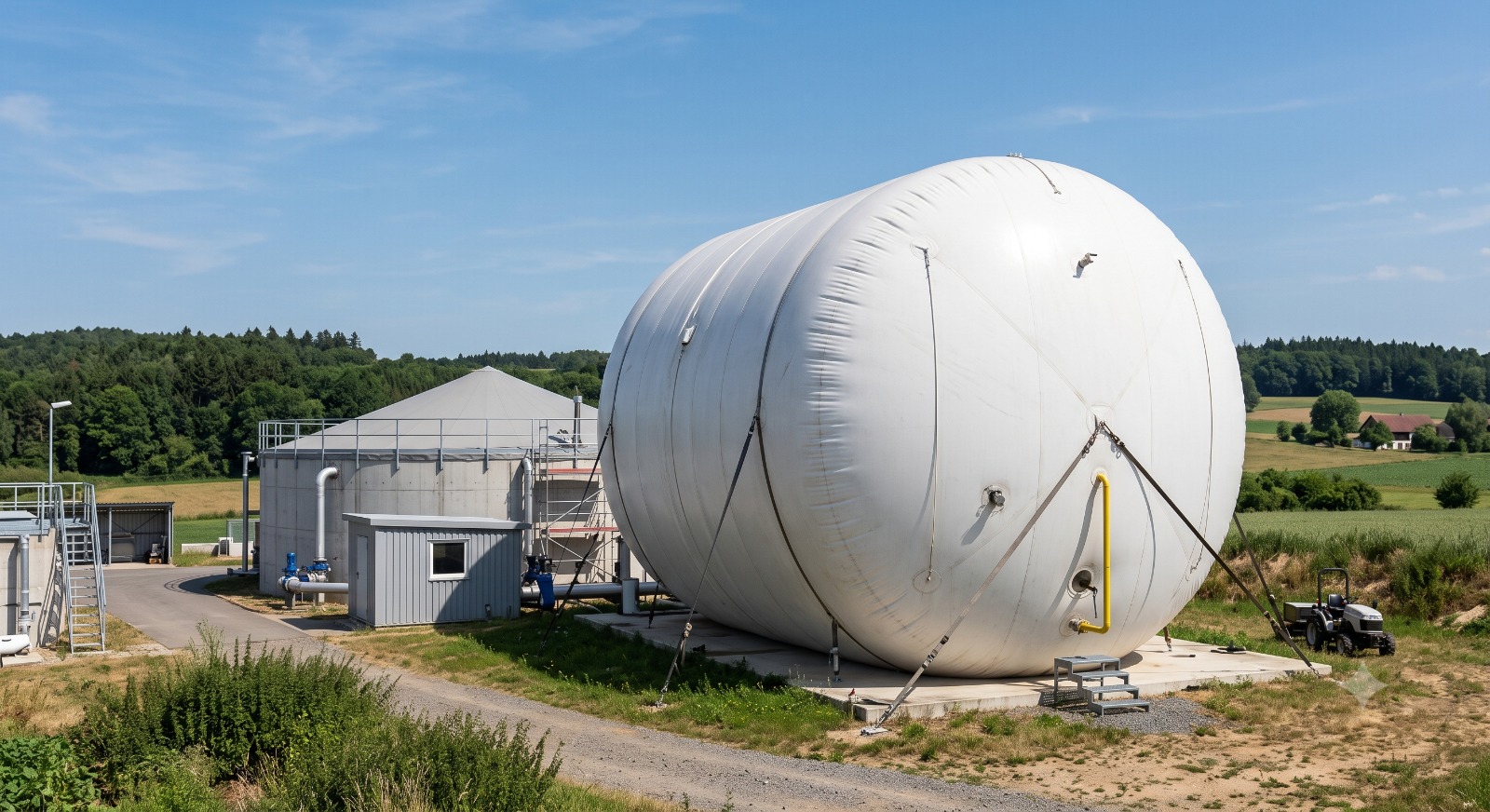
Biogas storage balloons look simple from the outside — a large, flexible bladder sitting on a biogas plant, quietly holding gas until it's needed. But the fabric that makes up that balloon is the result of a fairly involved manufacturing and testing process, and understanding it helps plant operators know exactly what they're buying when they source one.
This post looks at how the coated fabric behind a storage balloon fabric manufacturer actually gets made, tested, and supplied — from raw textile to finished membrane.
What's Actually Inside the Membrane
A storage balloon isn't a single sheet of plastic. It's a coated fabric: a woven textile base (usually polyester) with a polymer coating applied to both sides. The weave gives the fabric its strength and dimensional stability, while the coating provides the gas-tightness, weather resistance, and chemical resistance the application demands.
For biogas storage specifically, PVDF coated fabric is a common choice because of how well it holds up to UV exposure, temperature swings, and the mildly corrosive nature of biogas itself over years of outdoor use.
The Manufacturing Process, Step by Step
1. Base fabric selection
It starts with choosing a woven polyester base with the right denier and weave density for the intended balloon size and pressure rating. Too light, and the fabric won't hold up to repeated inflation cycles; too heavy, and it becomes difficult to weld and handle.
2. Coating application
The polymer coating is applied in controlled layers to achieve consistent thickness across the entire roll. This step determines most of the fabric's long-term performance — an uneven coating is one of the leading causes of premature membrane failure in the field.
3. Curing and lamination
The coated fabric goes through a curing process that bonds the polymer to the textile base, giving the finished material its flexibility without compromising strength.
4. Quality testing
Before any fabric goes into balloon production, it's tested for tensile strength, tear resistance, seam weldability, and gas permeability. This is where a gas balloon fabric supplier either earns trust or doesn't — testing has to happen on every batch, not just a sample run at the start of a production cycle.
5. Cutting and welding
Once the fabric passes quality checks, it's cut to pattern and welded into the final balloon shape. Weld quality matters just as much as the fabric itself, since a strong fabric with a weak seam still fails.
Why Flexible Membrane Fabric Needs Its Own Standards
Storage balloons operate under continuous low-pressure inflation and deflation cycles, sit outdoors for years, and are exposed to whatever gas composition the plant produces. This is a very different stress profile from, say, a truck tarpaulin or a pond liner — which is why flexible membrane fabric intended for gas storage is engineered and tested against its own set of benchmarks rather than borrowed from a general-purpose coated fabric line.
What Plant Operators Should Look For When Sourcing
If you're evaluating a supplier for a biogas storage balloon, a few things are worth confirming before placing an order:
- Batch-wise test certificates for tensile strength and gas permeability
- UV and weather resistance data relevant to your climate
- Confirmed weld/seam testing, not just raw fabric specs
- Clear sizing and capacity documentation matched to your plant's gas output
Where Biodomes Fits In
At Biodomes, we work with PVDF and PVC coated technical textiles built for biogas applications, including the membranes used in storage balloon fabrication, with in-house cutting and welding done to each plant's specifications. If your team is sourcing fabric for a new storage balloon or replacing an aging one, Biodomes is a good place to start that conversation.
Frequently Asked Questions
What coating is best for biogas storage balloons?
PVDF coated fabric is widely used for its UV and weathering resistance, though the right choice ultimately depends on the specific gas composition and site conditions.
How long does a storage balloon membrane typically last?
Lifespan varies with fabric quality, UV exposure, and maintenance, but a well-manufactured and properly tested membrane is built for many years of outdoor service.
Does the fabric need different specs for different balloon sizes?
Yes — larger balloons generally need higher-strength base fabric to handle the additional load and stress at the seams.
Is testing done on every batch or just periodically?
Every batch should carry its own test certificate — this is standard practice for a serious storage balloon fabric manufacturer and shouldn't be treated as optional.